

Gran Turismo: four years for one track and eight months per car
By Redacción UWLG · Source: Gamereactor España
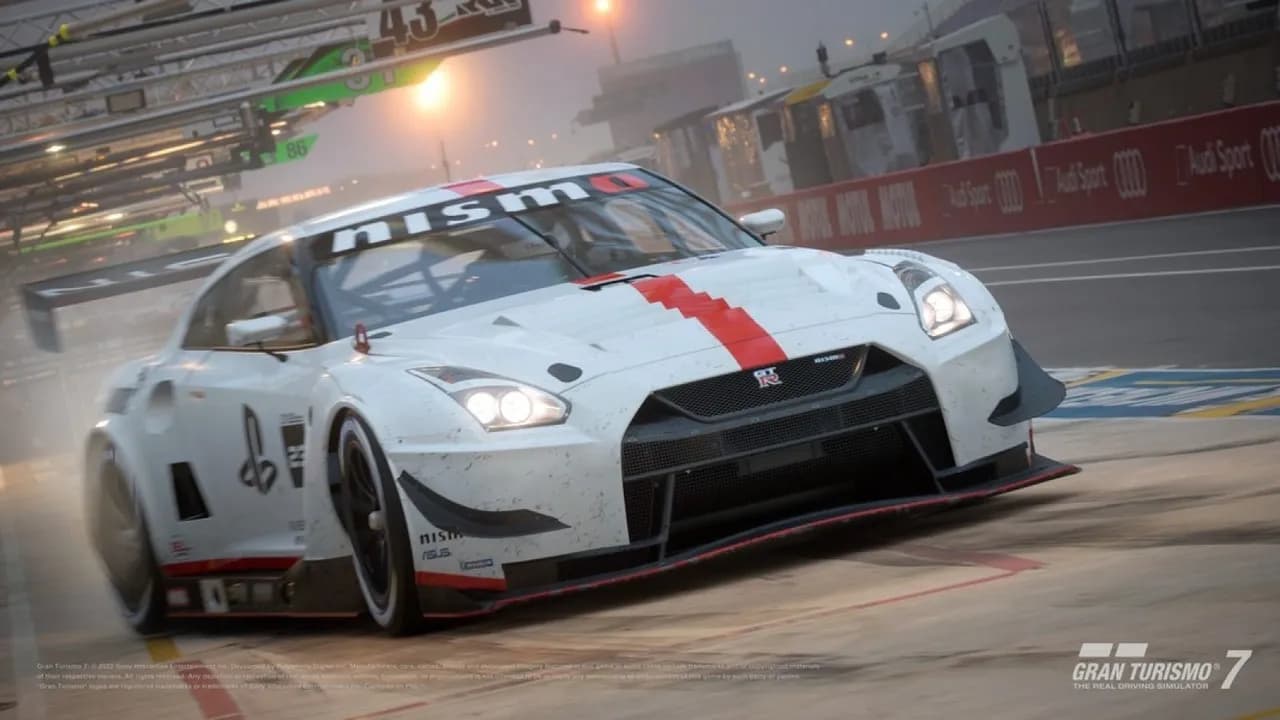
Imagen: Gamereactor España
If you have ever wondered why Gran Turismo 7 is still the only full game in the series since 2017, Kazunori Yamauchi has just given a pretty blunt answer. In an interview with British motoring magazine Evo, reported by Gamereactor España, the creator of the series put numbers on a process many of us suspected was slow, but not this slow: modelling a single car takes around eight months, and recreating a circuit can stretch to four years.
The figures matter beyond the anecdote. They explain Polyphony Digital's release cadence, they explain why Sony has chosen to keep feeding Gran Turismo 7 with new content since its launch in 2022 rather than rushing towards an eighth entry, and they help set expectations for the future of the series, which according to the same source is unlikely to arrive before the next PlayStation.
What you need to know
- Since 2017 only one full Gran Turismo has been released: Gran Turismo 7, in 2022.
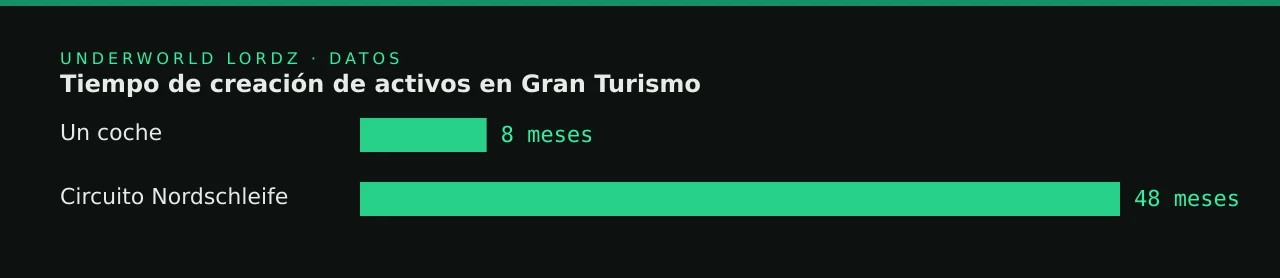
- According to Yamauchi, creating a car for the series takes around eight months, including the exterior and interior model and the physics that define how it behaves.
- A circuit can take up to four years; the example he gives is the Nürburgring Nordschleife.
- Sony has kept up continuous support for Gran Turismo 7 with new content since launch.
- There is no date for Gran Turismo 8, and everything suggests it will not arrive before the next PlayStation.
Eight months per car, four years per track
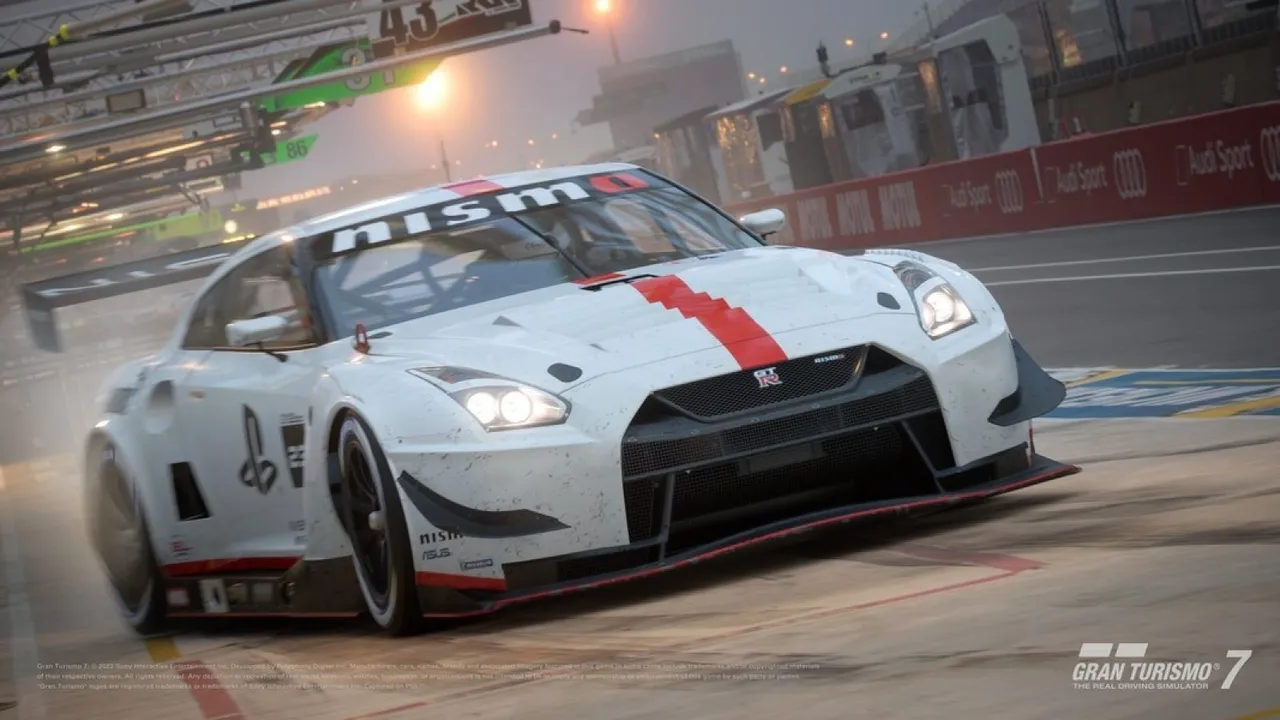
What Yamauchi describes is craftsmanship on an industrial scale. Each car is not just a pretty model for photo mode: the exterior and interior have to be built to an extremely high level of detail and, in parallel, the physics that determine how the vehicle's dynamics behave have to be constructed. That complete package, looks and behaviour, is what eats up eight months per unit. Multiply that by a catalogue of hundreds of cars and you understand why the studio cannot ship a new entry every two years.
With circuits the scale explodes. The Nordschleife is the extreme example, an enormously long track full of subtleties, but it is also the case Yamauchi chooses to make his point: four years of work for a single track. Put into perspective, that costs the same as six cars back to back.
| Element | Development time |
|---|---|
| One car (model and physics) | 8 months |
| Nordschleife circuit (Nürburgring) | 4 years |
What it means for the series
These timeframes explain Sony's strategy with Gran Turismo 7. Instead of chaining numbered entries, the company has turned the game into a living platform to which cars and content are added on a regular basis. It makes sense for the studio: each asset costs so much that it is more sensible to amortise it in a game that lasts over time than to leave it behind in a sequel.
It also puts the lack of news about Gran Turismo 8 into context. If the source is right and we will not see a new entry before the next PlayStation, GT7's life cycle will be one of the longest in the history of the series. That does not have to be a bad thing, as long as content keeps arriving and the game stays relevant for those who compete.
Our take
At Underworld Lordz we have a lot of respect for Polyphony's level of detail. When you race the Nordschleife in Gran Turismo and every kerb, every banking and every change in grip feels the way it should, you understand where those four years come from. For anyone competing in sim racing, that fidelity is not decoration: it is the difference between truly learning a circuit and learning an approximation. And for anyone creating content, it is what gives a hot-lap video something worth telling.
That said, we also have to be critical. Such a long development cycle has consequences for the competitive scene. Players who live and breathe the series need track variety and a sense of progress in the game, and if every new circuit is a multi-year project, the track list grows at a trickle. The continuous-content strategy works as long as the pace is enough to keep competition alive; the day it becomes obvious that too little arrives too late, the craftsmanship argument will stop working as an excuse.
We would like to see these figures come with a clearer roadmap. We know what each piece costs; what we do not know is how many more pieces will arrive before Gran Turismo 8 becomes a reality. For a community that builds its leagues and its streams around the game, that uncertainty weighs heavily.
What do you think?
Four years for one circuit may strike you as a justified luxury or as an absurdity that holds the series back. We see both sides. So what do you prefer: a Gran Turismo with less content but perfect down to the millimetre, or more circuits even if they do not arrive with as much detail? Let us know in the team chat or on our Discord.
Your turn
What do you think?
Share your take in the team chat or on Discord. We feature the best opinions in the next article.
How did it land?
Community takes
…