

iTero, GIANTX's AI coaching app, passes one million downloads
By Redacción UWLG · Source: Esports Insider
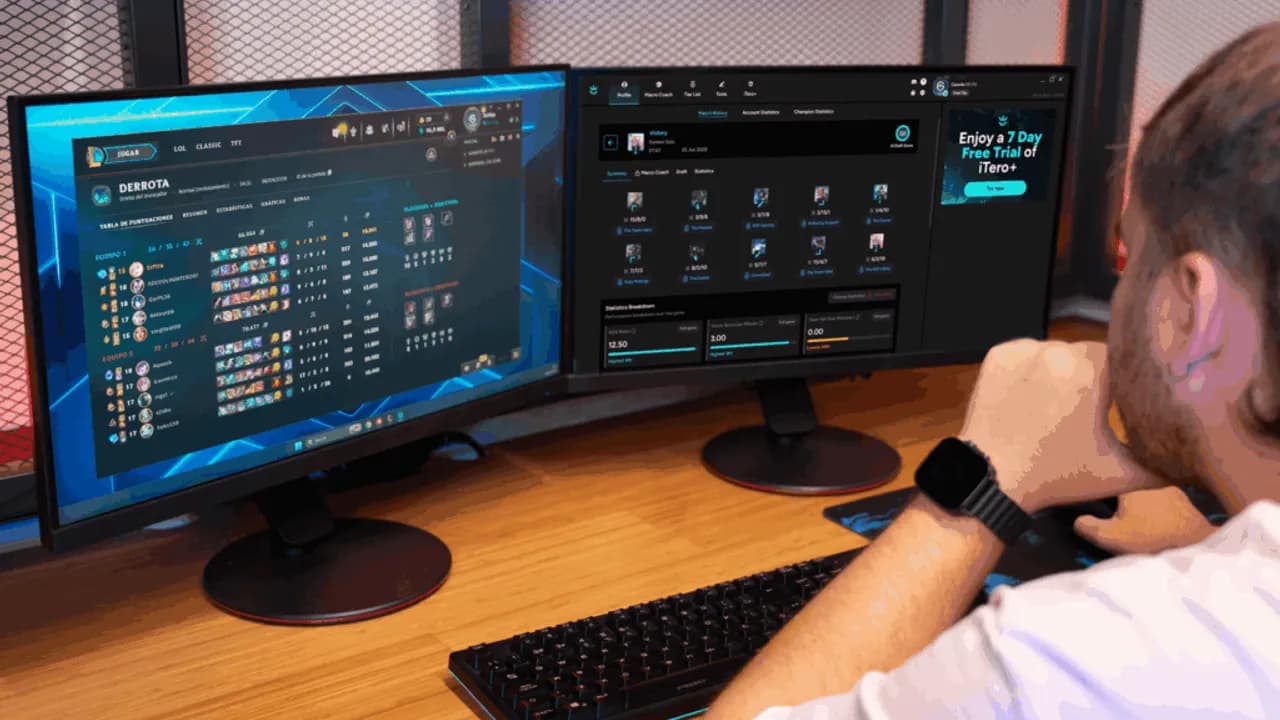
Imagen: Esports Insider
iTero, the artificial intelligence-powered coaching app owned by GIANTX (the LEC organisation formerly known as XL Esports), has just crossed the one million downloads mark. As reported by Esports Insider in an interview with its founder, Jack Williams, the milestone comes after a period of notable growth that began when GIANTX acquired the company in 2024.
An individual improvement tool reaching that figure is no small thing for the industry. Esports teams have spent years looking for revenue streams that don't rely solely on sponsorships and prize money, and the fact that an LEC club chose to buy a tech company and turn it into a mass-market product says a lot about where the business may be heading. And for those of us who compete, it also raises an uncomfortable question: how far can an algorithm replace the eye of a human coach?
What you need to know
- iTero has reached 1,000,000 downloads, according to Esports Insider.
- The app is owned by GIANTX, the LEC organisation formerly known as XL Esports.
- The acquisition closed in 2024 and, according to the source, growth has been considerable since then.
- Its founder is Jack Williams, a former Deloitte employee whose origin story, according to the source, is far less glamorous than the headline.
- In the interview, Williams himself discusses the future of AI coaching in esports, not just the present state of his product.
What iTero is and why GIANTX bought it
iTero is, essentially, a pocket coach: an app that analyses how you play and gives you recommendations to improve. The underlying idea is the same one that has always driven analysts at professional teams, only packaged so that any player with a phone or a computer can access it without paying for a full-time coach.
What makes the case interesting is who is behind it. GIANTX isn't a tech startup; it's a club with a spot in Europe's top League of Legends league. Its decision to acquire iTero in 2024 suggests the organisation was after something more than a new sponsor: it wanted a product of its own, with its own user base, that would generate value independently of competitive results. Esports Insider notes that growth has been rapid since that purchase, and the one million downloads would be proof that the bet has paid off, at least in terms of reach.
A far from glamorous origin
The source stresses that the company's story didn't begin with investors queuing up. Jack Williams came from Deloitte, meaning the world of consulting, not professional gaming. The Esports Insider piece hints that his starting point was a rather less epic episode, involving getting banned from somewhere, although the available summary cuts off right there and we're not going to fill in the gap ourselves. What is clear is that we're not talking about someone who came up from inside the scene, but an outsider who spotted a product opportunity.
Who this move affects
The first one affected is the everyday player, who now has an analysis tool backed by a top-tier club and with a user base large enough to keep the product evolving. The second group is amateur coaches and analysts, who are watching part of their groundwork (reviewing games, pointing out repeated mistakes, suggesting adjustments) start to become automated. And the third is the rest of the organisations, which will have to decide whether to build something similar, license someone else's technology, or just sit and watch.
Our take
At Underworld Lordz we're glad to see an esports club investing in its own technology rather than living purely off the jersey and the sponsor's logo. One million downloads is a serious number and, if the app delivers real value, it's one of the healthiest ways to sustain a competitive project. For our players, any tool that shortens the learning curve is welcome, as long as it's used as a complement to, and not a replacement for, team analysis.
That said, some scepticism is warranted. Downloads aren't the same as active users, and the source offers no retention data or measurable performance improvement among those who use it. AI coaching tends to be good at spotting mechanical patterns, but team decision-making, communication and handling pressure remain human territory. An algorithm can tell you that you farm badly; it's unlikely to tell you why your team falls apart at minute 25 when someone loses their nerve.
For content creators there's another angle: tools like this are near-infinite video material. Reacting to an AI's analysis of your own games, comparing what it says with what a real coach thinks, or putting its recommendations to the test on stream is a format that works. The question is whether organisations will end up reserving the best features for their own teams and leaving the public with a stripped-down version. That would be a mistake, because the community is precisely what made that million possible.
What do you think?
We believe AI is going to be one more tool in the competitive player's kit, neither the saviour nor the enemy of traditional coaching. But we want to hear how you see it, since you're the one grinding the hours on the Rift: would you trust your progress to an app, or would you rather have a person tell you where you're going wrong? Let us know in the team chat or on our Discord.
Your turn
What do you think?
Share your take in the team chat or on Discord. We feature the best opinions in the next article.
How did it land?
Community takes
…