

JSAUX and the Dock That Deliberately Charges Slowly to Keep Five Switch 2 Controllers Ready
By Redacción UWLG · Source: Eurogamer España
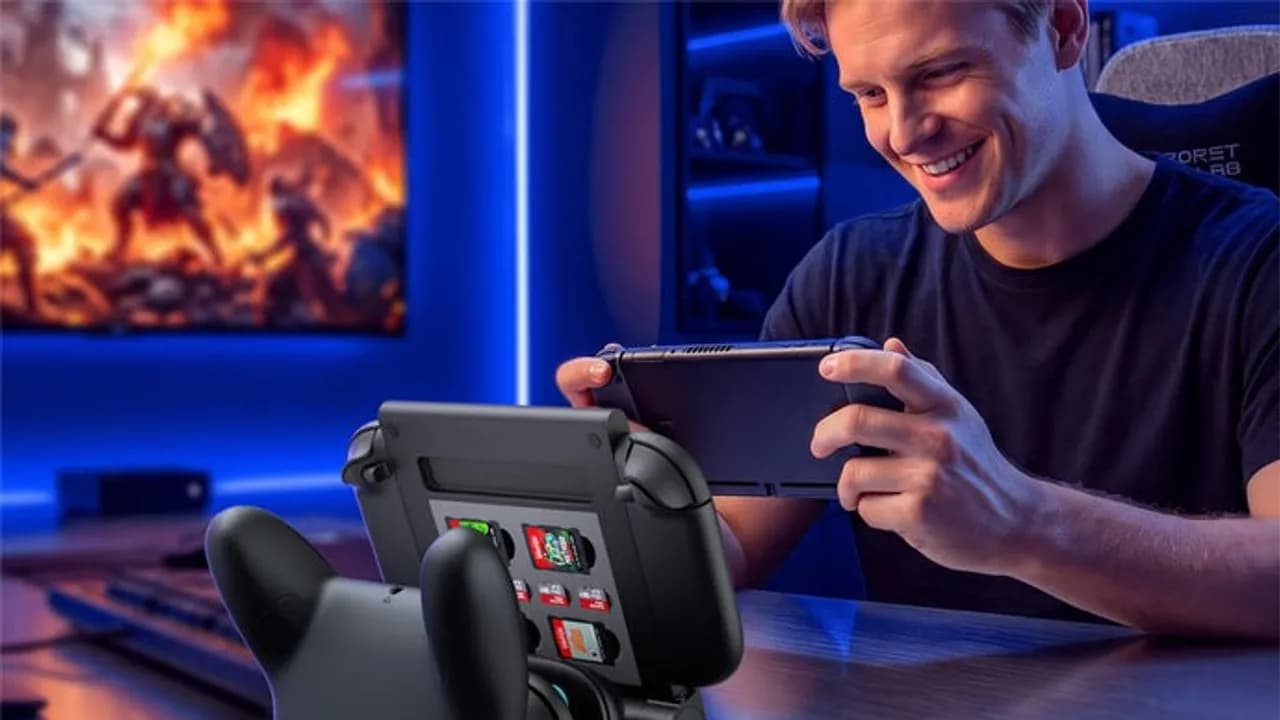
Imagen: Eurogamer España
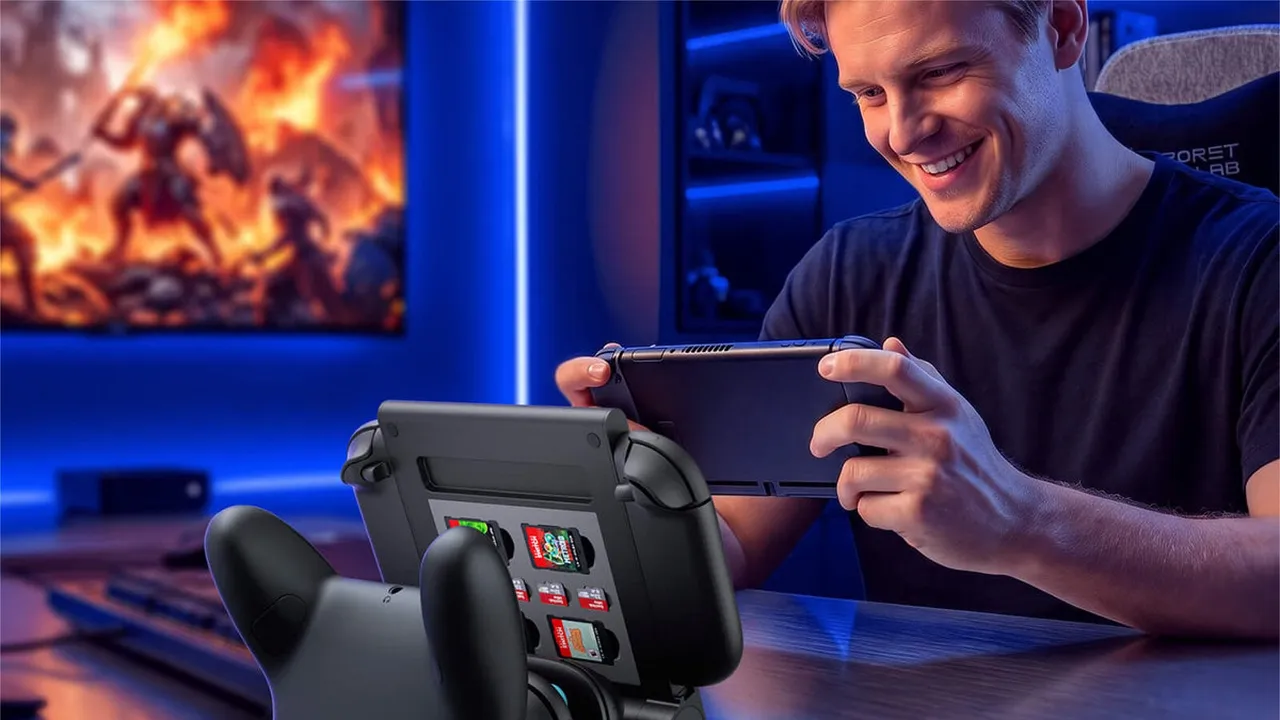
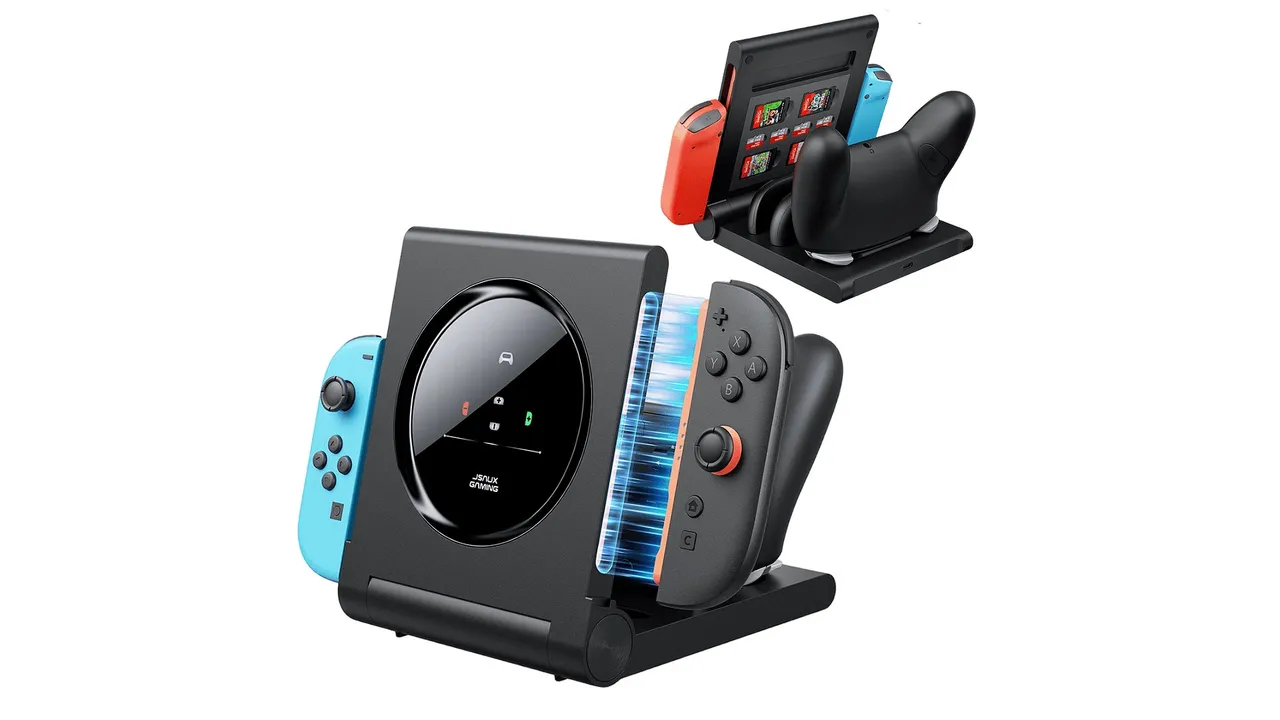
Anyone who has ever organised a gaming afternoon in the living room knows the scene: four people sitting down, the game loaded, and right at that moment one of the Joy-Cons warns that it is almost out of battery. According to Eurogamer Spain, JSAUX wants to put an end to that small domestic drama with its Multi-Controller Energy Station for Switch 2, a dock designed to keep up to five of the console's controllers charged and within reach.
The news matters for two reasons. The first is practical: the Switch 2, like its predecessor, remains a couch-and-gatherings console, and managing controller batteries is one of those everyday annoyances nobody has fully solved. The second is about the market: JSAUX, a brand specialising in accessories for handheld consoles, is gaining ground with an ever-growing catalogue for Switch 2, Steam Deck and ROG Ally, and this dock is a glimpse of where its strategy is heading.
What you need to know
- JSAUX's Multi-Controller Energy Station lets you leave up to five Switch 2 controllers charging on a single dock.
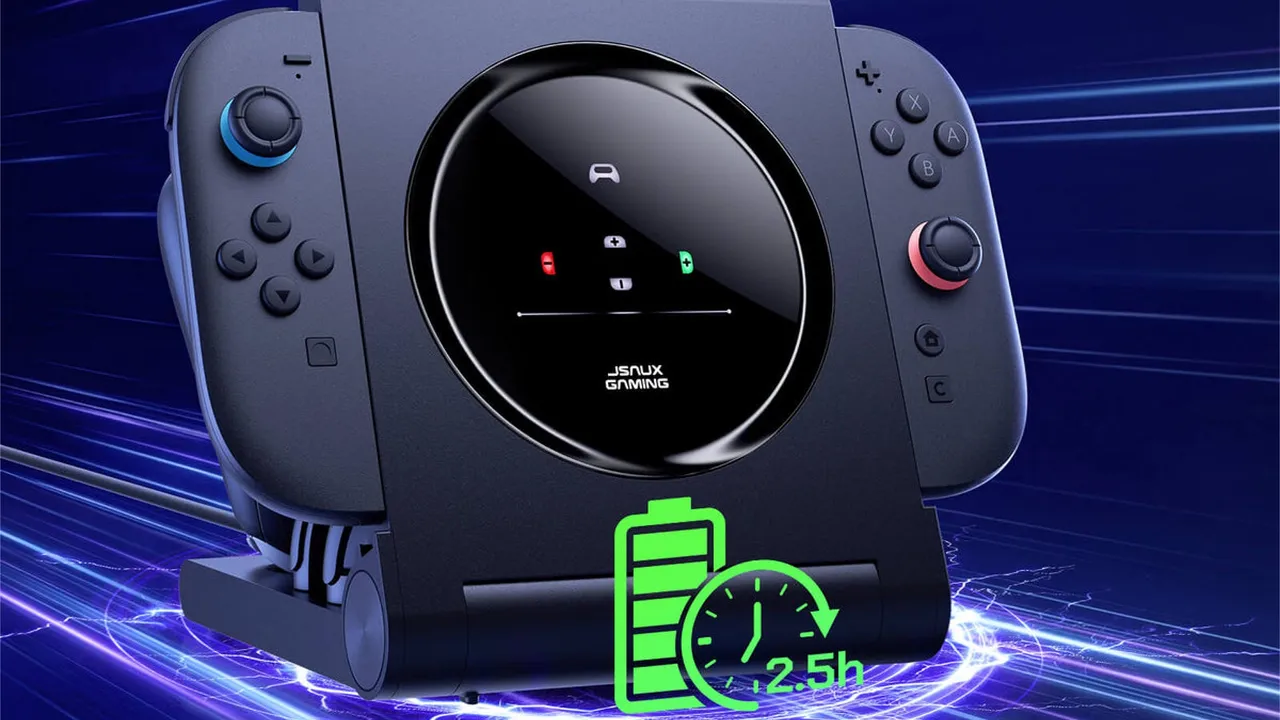
- Its approach is deliberately slow charging, a design decision that prioritises keeping controllers always ready over charging them at full speed.
- It is aimed at people who play in groups at home and suffer the classic dead battery in the middle of a four-player session.
- JSAUX is a company focused on accessories for handheld consoles, with products for Switch 2, Steam Deck and ROG Ally.
- The underlying information comes from Eurogamer Spain; there are no further technical or pricing details in the source we consulted.
What JSAUX is proposing and who should care
The idea behind the dock is simple: instead of having controllers scattered around the house, each with its own cable or its slot on the dock, they are gathered in a single spot where they are always charging. With room for five controllers, it more than covers a four-player session and leaves one spare controller, which is handy if someone arrives late or one of the Joy-Cons starts acting up.
What stands out is the slow-charging philosophy. In a market where everything is sold under the fast label, JSAUX goes in the opposite direction and presents that slowness as an advantage. The logic is that a controller resting on the dock for hours does not need to charge in twenty minutes; it needs to be at one hundred percent when you pick it up. It is an approach that fits how a living-room console is actually used: controllers spend far more time stored away than in people's hands.
The context: a brand carving out its niche
JSAUX is not a new name for anyone following the Steam Deck scene. The company has specialised in accessories for handheld consoles and has steadily expanded its catalogue towards the ROG Ally and, now, the Switch 2. Betting on a product as specific as a multi-controller charging dock says a lot about how it understands Nintendo's ecosystem: not as a pure handheld, but as a hybrid console where group play remains at the centre.
For competitive players, the proposal holds an indirect interest. It is not an accessory that improves performance, but it does remove an annoying variable: the uncertainty over whether the controller will last through a long practice session or a home tournament. And for content creators who record group sessions, having five controllers always operational is one of those conveniences that saves you from cutting a recording because of a low-battery warning.
Our take
Here at the Underworld Lordz editorial desk, we welcome the fact that an accessory brand is addressing a real problem instead of selling hot air with ultra-fast charging figures nobody needs in a controller. Deliberately slow charging is an honest decision if the goal is everyday convenience, and we find it a more interesting argument than many of the marketing promises we regularly see in this sector.
That said, we also need to be critical. The source provides no concrete data about the product beyond its capacity and its approach, so we cannot judge whether the price, the materials or the compatibility with different controller types justify the purchase. An accessory of this kind lives or dies by those details, and until we see them, our recommendation has to be cautious. On top of that, slow charging can be a genuine drawback if your routine is to grab the controller off the dock at short notice before an important session.
For a competitive team or a creator recording at home, our reading is clear: if you already own several controllers and frequently organise group sessions, a dock like this can spare you more than one headache. If you mostly play solo or in handheld mode, it is probably an accessory you can easily do without.
What do you think?
JSAUX's bet on slow charging as a selling point is, at the very least, different from the norm. Does the idea of having five controllers always ready win you over even if they take longer to charge, or do you prefer fast charging so you do not have to rely on a dock? Let us know in the team chat or on our Discord.
Your turn
What do you think?
Share your take in the team chat or on Discord. We feature the best opinions in the next article.
How did it land?
Community takes
…