

LG UltraGear 25G590B: the 1,000 Hz monitor that wants to set the ceiling for esports
By Redacción UWLG · Source: PC Gamer
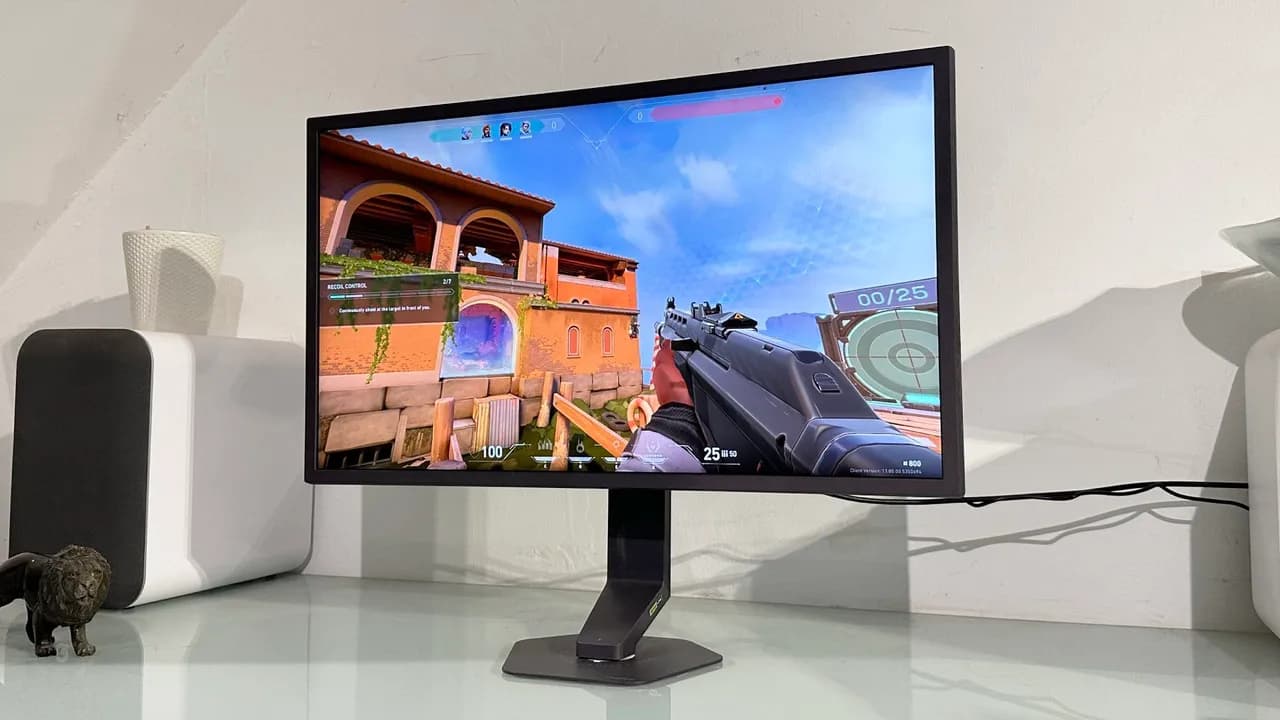
Imagen: PC Gamer
LG has put the UltraGear 25G590B on the table, a monitor built for esports that reaches a 1,000 Hz refresh rate. According to the review published by PC Gamer, the display is so fast that, in their own words and pun intended, it "hertz". Beyond the joke, the number marks a milestone that until recently seemed reserved for trade show prototypes rather than a panel you can actually put on your desk.
It matters because refresh rate has been the star selling point of competitive hardware for years, and crossing the four-digit barrier changes the conversation. We are no longer talking about an incremental step over the previous generation, but about a psychological and technical frontier that forces us to ask whether the monitor has overtaken what the eye, the hand and, above all, the graphics card are able to make use of.
What you need to know
- Model: LG UltraGear 25G590B, part of the Korean brand's gaming lineup.
- Refresh rate: 1,000 Hz, the figure that defines this launch and puts it at the cutting edge of the industry.
- Focus: an esports-oriented monitor, meaning shooters and competitive titles where every millisecond counts.
- Source: the review comes from PC Gamer, which highlights speed as the trait that sets it apart from everything else.
- What we don't know: the available information doesn't detail price, resolution or regional availability, so it's worth waiting for the official spec sheet before reaching for your wallet.
What a 1,000 Hz panel really means
The math is simple and brutal at the same time: at 1,000 Hz, each frame has a one-millisecond window to be drawn on screen. That cuts the time between your system generating an image and you seeing it down to the bare minimum, which in theory translates into less motion blur, cleaner target tracking and a feeling of responsiveness that borders on instantaneous. For a tactical shooter player, that margin is the difference between seeing an opponent peek around a corner and seeing them half a frame late.
The problem is that the monitor can only show what it receives. To squeeze out those 1,000 Hz you need a system capable of pushing a stable thousand frames per second, something that today is only within reach in very lightweight competitive games, with graphics settings at minimum and a very high-end machine. In any other scenario, the panel will be repeating frames or running far below its ceiling. That's not a flaw in the LG; it's the reality of the ecosystem around it.
Who this launch affects
The target audience is clear: professional players, organizations equipping their rosters and that type of amateur competitor who invests in hardware the way others invest in a carbon fiber racket. For them, any marginal advantage is welcome, and a monitor like this becomes a status symbol as much as a tool. It's also a warning shot to the competition: if LG has gotten here, the other manufacturers will have to respond, and that usually ends up pushing prices for the previous tier downward, which is where most of us actually buy.
For content creators, the picture is different. A 1,000 Hz monitor doesn't improve your stream or your videos, because platforms don't come anywhere near those rates. Its value lies in the player's own experience and, perhaps, in the appeal of showing it off on camera. It's a product to be enjoyed from the chair, not from the chat.
Our take
At Underworld Lordz we like hardware that breaks limits, and the UltraGear 25G590B does exactly that. A desktop monitor reaching 1,000 Hz is a feat of engineering and deserves the recognition PC Gamer gives it. That said, we believe this is a showcase product more than a battlefield one: most of our players, even those who compete regularly, would get more out of a good panel in the several-hundred-hertz range, a decent chair and hours of practice than out of a number that almost nobody can feed today.
We are also concerned that marketing will turn 1,000 Hz into the new mandatory bar. We've seen it with every previous leap: first it's a luxury, then it's sold as a necessity, and finally it becomes the excuse to justify why you lost a round. Refresh rate is one piece of the puzzle, not the whole puzzle. If your rig can't keep up, if your connection drops or if your aim isn't there, the fastest monitor in the world will only show you your defeat in sharper detail.
What we do celebrate is the knock-on effect. Every time a manufacturer pushes the ceiling, the mid-range gets better and cheaper, and that's where the community wins. If, some time from now, a monitor we consider elite today becomes the accessible standard for any squad on the team, this launch will have been worth it even if almost nobody buys this particular model.
What do you think?
We know the team has a bit of everything: people playing on a borrowed laptop and people with a setup that looks like a data center. Now that a 1,000 Hz monitor exists, the question is unavoidable and we want to hear from you in the team chat or on our Discord: would you really notice the difference, or do you think that past a certain point it's all just marketing?
Your turn
What do you think?
Share your take in the team chat or on Discord. We feature the best opinions in the next article.
How did it land?
Community takes
…