

VALORANT or MLBB: Two Opposite Paths to Dominating Women's Esports
By Redacción UWLG · Source: Esports Insider
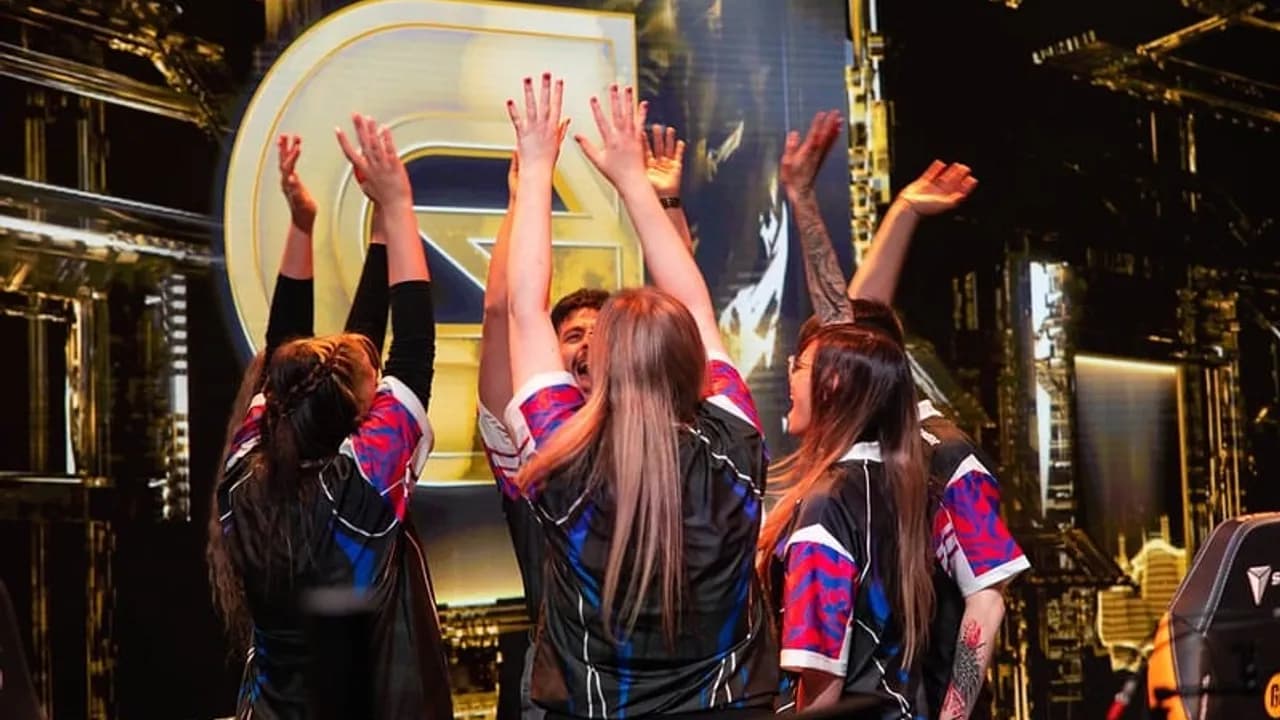
Imagen: Esports Insider
Which game rules women's esports today? According to an analysis published by Esports Insider, there is no single answer: the scene has two very different centers of gravity. On one side, VALORANT, which has spent five years building Game Changers as a global circuit with regional competitions, open qualifiers and an annual world championship. On the other, Mobile Legends: Bang Bang, which has chosen to lean on its massive Southeast Asian audience to stage some of the biggest events in the category.
The comparison matters because it goes far beyond a popularity ranking. It speaks to two opposing philosophies for growing a competitive ecosystem: the structured, scalable circuit versus the big event that taps into an already existing fan base. For players looking for a professional path and for creators who want to invest in these scenes, understanding that difference is key.
What you need to know
- Esports Insider identifies two clear poles in women's esports: VALORANT and Mobile Legends: Bang Bang.
- VALORANT has spent five years developing Game Changers, a global circuit with regional competitions, open qualifiers and an annual world championship.
- MLBB has taken a different route: leveraging its enormous Southeast Asian audience to organize some of the biggest events in the industry.
- The contrast isn't just about game genre (PC tactical shooter versus mobile MOBA), but about model: permanent structure versus concentrated spectacle.
Two models, two bets
Riot's Game Changers project is, above all, infrastructure. By combining regional competitions, open qualifiers and an annual world championship, the circuit offers something that has historically been missing from women's esports: continuity. A player who starts out in an open qualifier knows what ladder lies ahead of her and at what point in the year the big event is played. That predictable calendar is what allows teams to justify contracts, sponsors to plan and creators to build content around a full season.
MLBB represents the opposite path. As Esports Insider describes it, Moonton's title hasn't needed to build a circuit from scratch because it already has a huge viewer base in Southeast Asia. With that foundation, it can organize large-scale women's events that fill screens and venues. Its strength is one-off impact: when MLBB puts on a big women's tournament, the buzz is considerable. Its potential weakness is its dependence on a single region and on the willingness to keep investing in that format.
What it means for the Spanish-speaking community
From the perspective of the Americas and Europe, the difference is tangible. Game Changers has a regional presence, and that means a player from Madrid, Bogotá or Mexico City has an identifiable route to the top level. MLBB, on the other hand, concentrates its women's scene far from our main markets. For the Spanish-speaking audience, right now, VALORANT is the most accessible stage in practice, even though the mobile game also has plenty of fans in our countries.
Our take
At Underworld Lordz we believe the question of who dominates is framed wrong if it's answered only by audience size. A giant event is a snapshot; a circuit is a movie. What VALORANT has done with Game Changers over five years is the closest thing to a real professional career the women's scene has ever had, and that has a value that isn't measured in peak viewers. If we had to decide where to invest practice hours and content creation resources, structure beats spectacle.
That said, it would be unfair to dismiss the MLBB model. Western esports have spent years trying to build audiences from the top down, with expensive leagues that don't always connect with the public, while the mobile game has shown that when the community already exists, a women's tournament doesn't need to be a subsidized experiment: it's simply a product people want to watch. That lesson should make more than a few PC publishers uncomfortable.
Our criticism goes both ways. We ask Riot not to let Game Changers remain an eternal parallel circuit, and to give standout players real bridges into open competition. We ask Moonton to turn its big events into something that also works outside Southeast Asia, because a scene that depends on a single region is a fragile scene by definition.
What do you think?
Permanent structure or big event with a guaranteed audience: both paths have their arguments, and the women's scene probably needs a bit of both. As a player or creator, which model would you bet your time on, and why? Tell us in the team chat or on our Discord.
Your turn
What do you think?
Share your take in the team chat or on Discord. We feature the best opinions in the next article.
How did it land?
Community takes
…