

Wardogs and the shooter where you actually get revived: PC Gamer puts the spotlight on its community
By Redacción UWLG · Source: PC Gamer
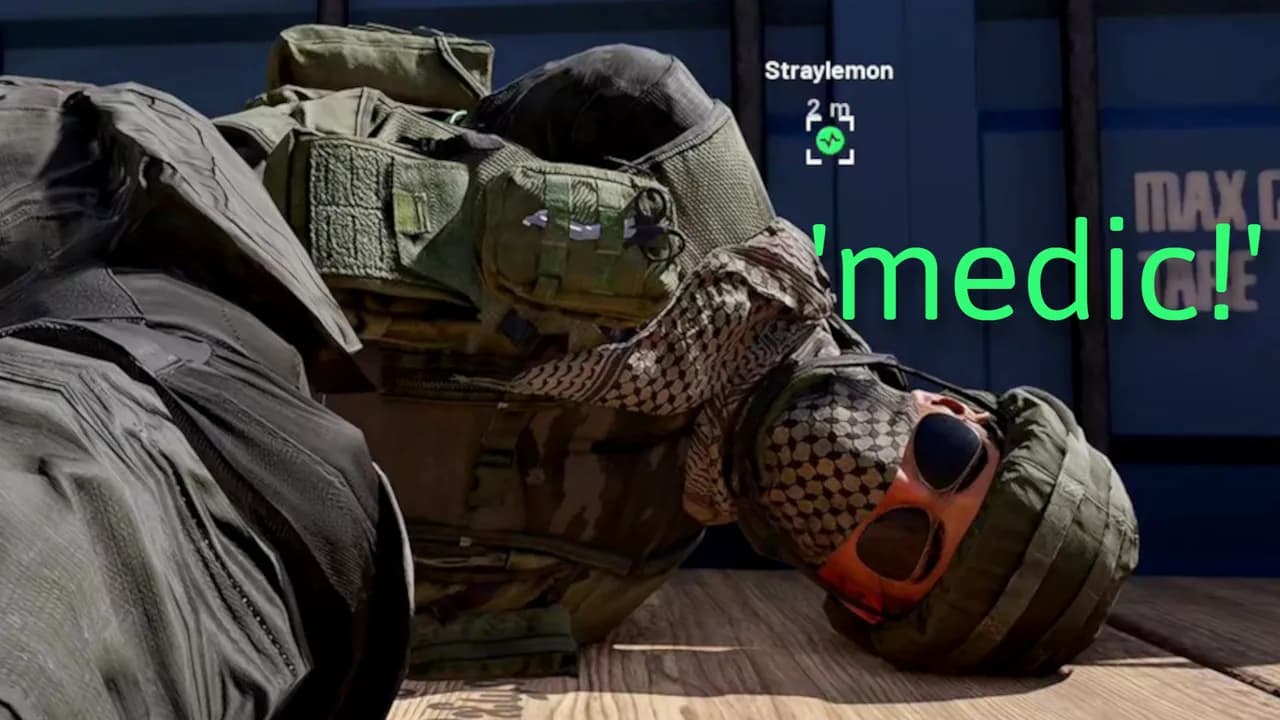
Imagen: PC Gamer
Anyone who has played squad-based shooters knows the scene: you go down, your icon flashes on the map begging for help, and your teammates walk right past you as if you were part of the scenery. That's why what PC Gamer has published about Wardogs stands out: its writer says it's the only FPS where he genuinely expects someone to pick him up when he goes down. It's not that being revived surprises him; it's that he already counts on it.
The idea may seem minor, but it touches one of the oldest problems in cooperative and competitive shooters: getting strangers to behave like a team. According to the outlet, in Wardogs people want to help, bribe or no bribe. That phrase, which sums up the original article, suggests the game includes some kind of incentive for reviving, but that cooperation goes beyond what the system demands. And that's where things get interesting for us.

What you need to know
- PC Gamer describes Wardogs as the only FPS where its writer takes it for granted that his teammates will revive him.
- The article mentions that there is a bribe element tied to helping other players, although the conclusion is that people help anyway, with or without it.
- The focus of the piece isn't on weapons or maps, but on community behavior and how the design encourages it.
- It's the writer's personal assessment, not a statistic or a study: it should be taken as a play impression.
- The underlying information in this article comes from PC Gamer; we provide the context and the opinion.
Why reviving is a design problem, not a matter of goodwill
In most shooters with a revive mechanic, the game rewards the one who kills far more than the one who helps. Visible stats, unlocks and even the sense of progression tend to revolve around K/D, and reviving a teammate rarely carries the same weight on the scoreboard. The result is predictable: when a player has to choose between securing a kill or exposing themselves to pick someone up, most choose the kill. It's not malice, it's incentive.
What PC Gamer suggests with Wardogs is that the balance tips the other way. If there's a bribe mechanic, meaning a direct reward for coming to someone's aid, that already changes the math. But the important nuance in the article is that, according to the writer, people help even when there's no bribe involved. That indicates the system has achieved something harder than paying for an action: it has created a culture. When everyone expects to be revived, everyone revives, and the behavior reinforces itself.
What this means for anyone who plays as a team
For a casual player, getting revived is a convenience. For someone who competes or plays in an organized squad, it's an entire strategic layer. A team that knows its downed members will return to the fight can afford more aggressive plays, riskier rotations and a different approach to resource management. Conversely, in games where nobody bothers to pick anyone up, the match becomes a sum of individuals and teamwork is left to whoever has a microphone and patience.
There's also a takeaway for the community at large: shooters that manage to get strangers to cooperate tend to have less toxic lobbies and a gentler learning curve for newcomers. If Wardogs has truly found the formula, even through an incentive as unromantic as a bribe, there's a lesson in there for other studios.
Our take
At Underworld Lordz we've spent years watching teamwork turn into an empty promise in many FPS games. Trailers sell coordinated squads, and the reality of the random lobby is that everyone does their own thing. That's why we find it more relevant than it appears that an outlet like PC Gamer points to the revive culture as Wardogs' defining trait. It's not the graphics or the gunplay: it's that people help. In a shooter, that's worth its weight in gold.
That said, we're skeptical about one thing. If cooperation depends on a bribe, meaning an explicit reward, the question is what happens when that reward stops being interesting, when veteran players no longer need it, or when the competitive meta discovers it's more profitable to ignore the downed player. Artificial incentives work until someone finds the shortcut. The PC Gamer writer assures us that people help with or without the bribe, and hopefully he's right, but it's a personal impression and not a guarantee that the behavior will hold up over time.
For content creators, on the other hand, we see it as almost entirely positive. A game where strangers cooperate generates far more marketable moments than one where they leave you to die in silence: last-second rescues, squad comebacks, stories to tell on stream. If Wardogs keeps that spirit alive, it's the kind of shooter that provides plenty of material for a stream or a video without depending on a closed group of friends.
What do you think?
We're clear that a shooter where people help each other is worth more than one with better numbers on paper, but we also know that good manners in a lobby last only as long as the incentive does. Tell us in the team chat or on Discord: would you revive a stranger if the game gave you nothing in return, or do you only do it when there's a reward involved?
Your turn
What do you think?
Share your take in the team chat or on Discord. We feature the best opinions in the next article.
How did it land?
Community takes
…