
AMD confirms FSR Diamond: the next Xbox will get its own AI upscaling
By Redacción UWLG · Source: Vandal
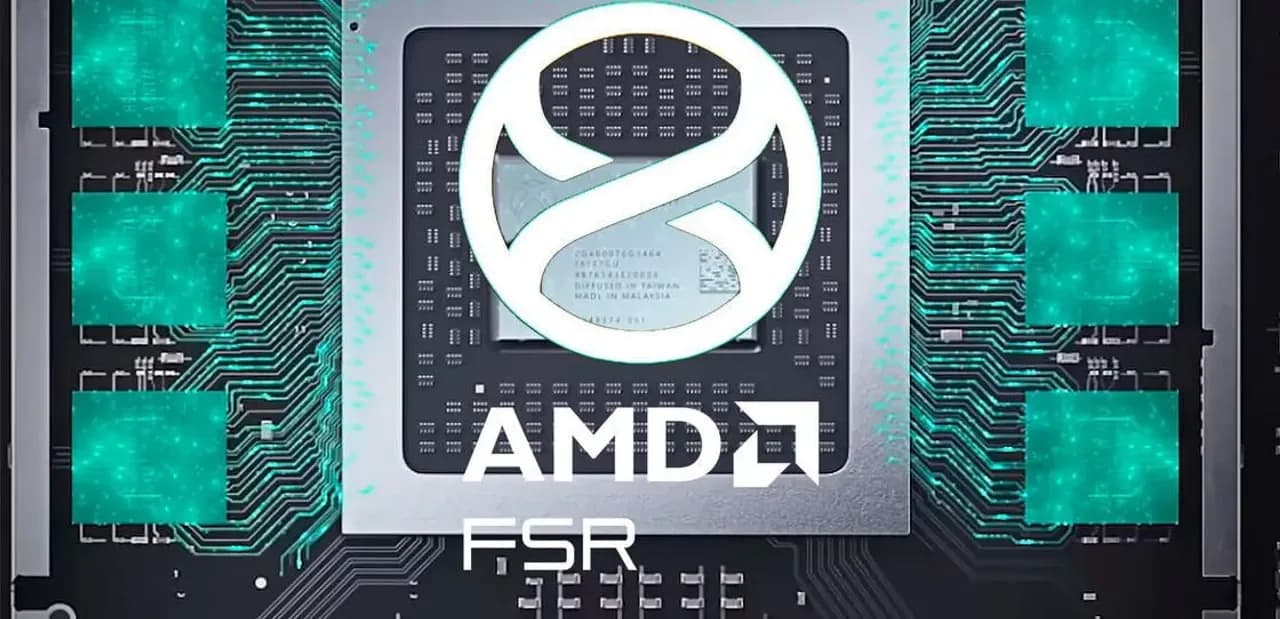
Imagen: Vandal
AMD has put Project Helix, the next Xbox console, back at the center of the conversation. As reported by Vandal, the company led by Lisa Su used the FSR 4.1 announcement blog to remind everyone that it is working hand in hand with Microsoft on a dedicated version of its upscaling technology: AMD FSR Diamond, designed and optimized for the new machine. The official post itself talks about using that technology to “further power the next generation of video games.”
Why does this matter to those of us who compete and create content? Because AI upscaling is no longer an extra reserved for enthusiast PCs. It is the piece that decides whether a console can sustain high resolutions and stable frame rates without blowing up the budget. AMD openly discussing a “Diamond” variant for Helix confirms that the console’s graphics performance will depend heavily on smart software, not just on the raw power of the APU.
What you need to know
- FSR Diamond is the version of FSR built specifically for Project Helix, according to the official AMD blog cited by Vandal.
- The confirmation came as part of the AMD FSR 4.1 announcement, the latest iteration of AMD’s upscaling technology for the general market.
- Helix will run on an AMD APU as the heart of the system, something already confirmed that continues the partnership seen on Xbox Series X/S.
- Scott Van Vliet, Xbox’s chief technology officer, also took part in the announcement to discuss the relationship between the two companies.
- No numbers yet: this communication revealed no release date, price, or concrete performance data for FSR Diamond.
What FSR is and why a “Diamond” version
FSR (FidelityFX Super Resolution) is AMD’s family of technologies that renders a game at a lower resolution and reconstructs it at a higher one, gaining frames in exchange for a visual cost that becomes less noticeable with each generation. The newly announced 4.1 version is the evolution for the general market and, according to the source, the perfect excuse for AMD to talk about what it is preparing with Microsoft.
The key point is that Diamond is not being pitched as generic FSR installed on a console, but as a technology optimized for Project Helix. In practice, that suggests joint work at both the hardware and software level: AMD designs the APU, Microsoft defines the system, and the upscaling is tuned to that specific combination. That is a significant difference from what we saw in the current generation, where upscaling solutions arrived on the fly and depended heavily on how much each studio cared.
A partnership with history
As Vandal points out, this is not the first time AMD and Xbox have shown off their relationship. Both companies have already discussed their joint work on Xbox Series X and Series S, and continuity with Helix had been guaranteed for some time. What is new is the tone: AMD now talks openly about the console on its own channels and puts a name on an exclusive technology, something usually reserved for more advanced stages of development. Having Xbox’s chief technology officer appear in that same announcement reinforces the idea that Microsoft wants to start building the technical narrative around Helix right now.
Our take
At Underworld Lordz we have mixed feelings. On one hand, having AI upscaling baked into the console’s DNA from the design stage is great news for competitive players: a common, stable foundation for reaching high frame rates in shooters and fighting games is exactly what we want from a closed platform. If FSR Diamond lets studios offer serious performance modes without ugly compromises, the console experience will get closer to that of a well-configured competitive PC.
On the other hand, we are worried about the fine print that does not exist yet. Every upscaler adds a processing step and, when poorly implemented, produces artifacts and ghosting that cost you dearly in a high-level match. For content creators, AI reconstruction can also leave an image that looks great on the monitor but gets mangled by the stream encoder. Until AMD or Microsoft show real numbers for latency, quality, and available modes, “Diamond” is mostly a pretty marketing name.
And there is a third reading: this communication arrives in a week packed with Helix news, yet the message includes no games, no date, and no price. Hyping things up with partner technologies before showing what actually sells a console strikes us as a sign that Microsoft is still fine-tuning its pitch. We would rather judge when we have the controller in our hands.
What do you think?
AI upscaling is here to stay and Project Helix will have it built in from day one. The question is whether that reassures you or raises doubts when it comes to competing. Do you trust FSR Diamond for your ranked matches, or will you keep preferring native rendering and a PC? Drop by the team chat or our Discord and let us know.
Your turn
What do you think?
Share your take in the team chat or on Discord. We feature the best opinions in the next article.
How did it land?
Community takes
…
Keep reading
Hardware
FSR 4.1 Comes to Xbox Series X: AMD Hands Microsoft a Weapon to Take On PS5

Hardware
Dragon's Dogma 2 on Switch 2: the "impossible" port goes head to head with PS5 and Steam Deck
Hardware
PS6 and the Memory Bill: Over $680 in RAM and Storage Alone
Hardware
Sony patents sticks with adjustable resistance: adaptive triggers come to the thumbstick