
Pimax Jumps on Valve's Bandwagon: Wireless VR and a Taller Steam Machine
By Redacción UWLG · Source: PC Gamer
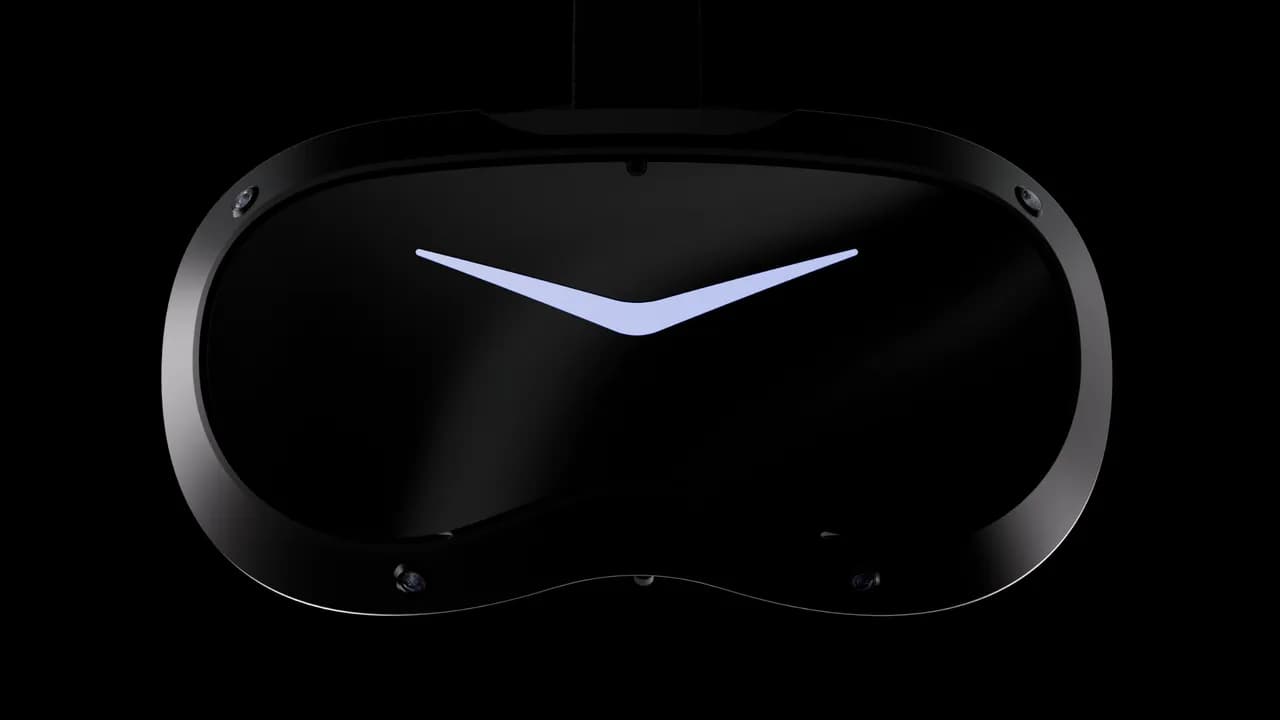
Imagen: PC Gamer
Pimax, the brand known for its ultra-wide field-of-view virtual reality headsets, has just announced a hardware push that sounds very familiar. As reported by PC Gamer, the company unveiled a new wireless VR headset, foveated streaming technology, updated controllers and its own Steam Machine-style system, with the twist that it is quite a bit taller. The outlet sums it up wryly: picture a Steam Machine, but longer. And Pimax itself seems to own it unapologetically, with a message that essentially says 'I'll have what Valve's having.'
Why does it matter? Because this isn't a standalone product, but a copy of an entire strategy: headset, controllers and a living-room PC, all designed to work together as an ecosystem. When a niche manufacturer decides to follow the path Valve is laying down, it's betting that PC gaming beyond the desk and cable-free VR are the next big battleground. For competitive players and content creators, that could mean more options, but also more fragmentation.

What You Need to Know
- Pimax announces a new wireless VR headset, moving away from its reliance on cables.
- The company is adding foveated streaming, a technique that concentrates image quality where the user is looking.
- Updated controllers arrive alongside the new headset.
- Pimax unveils a Steam Machine-style PC with a noticeably taller form factor.
- The tone of the announcement itself acknowledges direct inspiration from Valve's strategy.
What Changes and Who It Affects
The key concept here is foveated streaming. Put simply, the idea is to avoid spending bandwidth or processing power on areas of the image your eye isn't looking at closely, and to reserve maximum quality for the exact point of focus. In a wireless headset, that's gold: the biggest enemies of cable-free VR have always been compression, latency and visual artifacts. If the technique works well, you could play wirelessly with perceived quality very close to that of a wired connection. PC Gamer doesn't share performance figures, pricing or a release date in this piece, so we'll have to wait for real-world testing before declaring victory.
The other pillar is the Steam Machine-style system. Valve has been pushing the idea of a compact living-room PC that works almost like a console, and Pimax wants its own version. The taller design could be a choice to improve cooling or fit in more hardware, but we don't know for sure. What is clear is the target audience: VR enthusiasts and PC gamers who want an integrated experience without setting up a tower under their desk.
Background
Pimax has always played in the enthusiast headset league: high resolution, a huge field of view and, in exchange, demanding setups. This announcement suggests a shift toward the practical and the accessible, following the path Valve has set with its own hardware lineup. It's a sign that the market is no longer satisfied with headsets that look spectacular on paper, and now demands comfort and a closed ecosystem that simply works.
Our Take
Here at the Underworld Lordz newsroom we love competition, and foveated streaming strikes us as the most interesting piece of the whole package. For competitive VR players, latency is everything: a wireless headset that doesn't compromise responsiveness could change the way people train in rhythm games, VR shooters or sims. But be careful, because 'wireless' has promised a lot for years and only half delivered. Until we see independent measurements, our confidence is moderate.
What raises more doubts for us is the Steam Machine-style PC. Copying Valve's idea is fair game, but without the store, the operating system and the weight of Steam behind it, Pimax's edge has to come from the hardware or from integration with its headset. If it's just a taller box with a different logo, it will be hard to justify. On top of that, closed ecosystems tend to raise the cost of entry and complicate accessory compatibility, something the competitive community is never happy about.
For content creators, high-quality wireless VR is great news: recording without getting tangled in cables and moving around freely makes for better footage and more dynamic streams. That said, Pimax's honesty in admitting its inspiration is somewhat endearing, but it also raises an uncomfortable question: genuine innovation, or just showing up on time to someone else's party?
What Do You Think?
Cable-free VR and living-room PCs are gaining ground, and Pimax wants its slice of the pie. Do you see it as a real alternative to what Valve is offering, or a late copycat? Would you swap your current setup for a wireless headset with foveated streaming? Let us know in the team chat or on our Discord: would you trust Pimax for your next competitive gaming rig?
Your turn
What do you think?
Share your take in the team chat or on Discord. We feature the best opinions in the next article.
How did it land?
Community takes
…
Keep reading

Hardware
Gears of War: E-Day Head to Head: From Steam Deck to a High-End PC

Hardware
Sony patents NPCs that learn from you: AI wants to study how you play

Hardware
Xbox Helix won't be a single console: Microsoft doubles down and hints at a handheld

Hardware
Used PS5 Pros at $1,500: GameStop Turns the Pre-Owned Market Upside Down