
Pimax joins the Steam Machine craze with an elongated mini PC that runs SteamOS
By Redacción UWLG · Source: PC Gamer
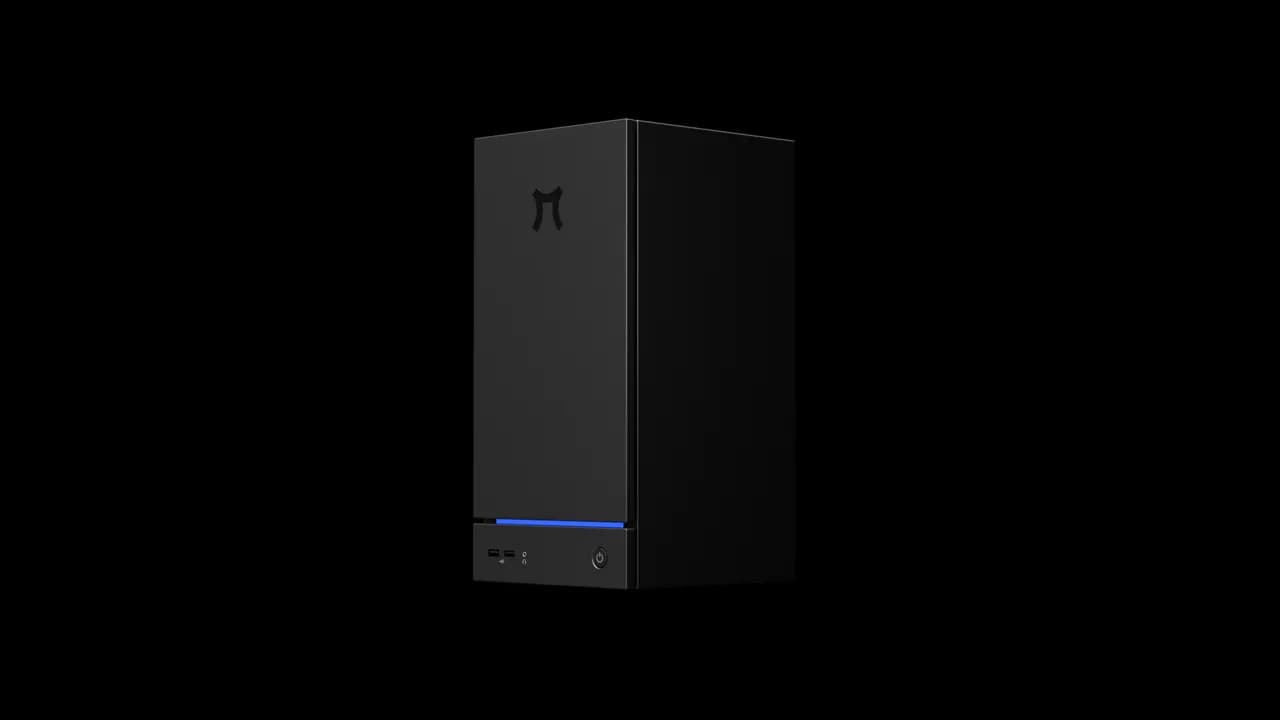
Imagen: PC Gamer
Pimax, a brand most of us associate with virtual reality headsets, has decided to make a grand entrance into the living room. As reported by PC Gamer, the company has unveiled a mini PC built to run SteamOS whose looks immediately bring to mind Valve's Steam Machine, with the difference that its chassis is noticeably longer. The outlet sums it up with a touch of irony: if it looks like a Steam Machine and runs SteamOS, then it is a Steam Machine, even if Valve didn't sign off on it.
The news matters more for what it represents than for the product itself. Valve has put the Steam Machine back at the center of the conversation and, with it, the idea that SteamOS can be the foundation of a PC console for the TV. The fact that a third-party manufacturer, and one that didn't even come from the compact PC world, is jumping in to copy the formula suggests the ecosystem is starting to take on a life of its own. That affects any player thinking about building a living room rig, as well as creators who want a simple machine to play and stream on without fighting with Windows.

What you need to know
- Who: Pimax, known until now for its virtual reality headsets, is making the leap into desktop mini PCs.
- What: a compact machine built for SteamOS, Valve's Linux-based operating system that powers the Steam Deck and the Steam Machine.
- How it looks: the design shamelessly mimics Valve's Steam Machine, but in a longer form factor, which has earned it the nickname elongated Steam Machine.
- What we don't know: the information published by PC Gamer doesn't include technical specifications, pricing, or a release date, so we'll have to wait.
What exactly this machine is
The source makes the concept clear, but not much more. We're talking about a mini PC designed to plug into the TV, boot into SteamOS, and deliver a console-like experience backed by the Steam catalog. By going with Valve's system instead of Windows, Pimax saves itself the work of designing its own interface and latches onto the brand that currently has the most pull in living room PC gaming.
The move makes sense for a virtual reality company. Pimax has spent years selling headsets that require a powerful PC connected alongside them, and many of its customers are looking for exactly that: a compact, quiet machine that doesn't take up half a desk. A mini PC with SteamOS lets them offer a more self-contained package, although the source doesn't mention whether the product is being marketed with virtual reality in mind or how it would integrate with their headsets.
What is worth underlining is what's missing. Without details on processor, graphics, memory, or price, it's impossible to know whether we're looking at a serious rival to the official Steam Machine or an opportunistic clone living off its visual resemblance. That's the big unknown and the reason why, for now, this news should be read as a statement of intent rather than a launch.
The Steam Machine effect
Valve already tried the Steam Machine idea a decade ago, and that first attempt went nowhere, largely because SteamOS wasn't mature and game compatibility was a disaster. The situation today is very different: the Steam Deck proved the system can be a real gaming platform, and Proton has made a huge portion of the catalog work without the user having to touch anything.
With that groundwork laid, Valve's new Steam Machine has brought back interest in living room PCs and, predictably, third-party manufacturers have smelled the opportunity. Pimax's machine is one of the first clear examples of a system that doesn't just stop at being SteamOS-compatible, but also adopts Valve's aesthetic so buyers can tell at a glance what it's all about.
Our take
At Underworld Lordz, we view this announcement with a mix of curiosity and skepticism. We like seeing more manufacturers pushing SteamOS beyond the handheld, because the more hardware there is, the more pressure studios will feel to make their games run well on Linux. But copying Valve's design and stretching it a few centimeters isn't innovation. If Pimax wants to earn its place, it will have to stand out in something that matters: performance, cooling, noise, or a price that really hurts.
For competitive players, the underlying problem remains the same as with any SteamOS machine: a share of the big shooters and multiplayer games with aggressive anti-cheat still don't work, or only half work. It doesn't matter how pretty the chassis is if your main title won't launch. Until that's resolved, a mini PC like this is a great option for the living room and for a player's backlog, but not for anyone grinding ranked every day.
For content creators, the reading is similar. A compact, quiet machine with a console interface is very appealing for streaming from the couch, but the ecosystem of capture tools, overlays, and plugins is still far more mature on Windows. Pimax would have to prove the machine delivers under pressure, not just that it looks good under the TV.
What do you think?
A VR headset brand deciding to build its own Steam Machine is a sign of where PC gaming is heading, and we want to know whether it wins you over. Would you buy a third-party SteamOS mini PC instead of Valve's official Steam Machine, or would you rather build your own tower and stick with Windows? Tell us in the team chat or drop by our Discord and debate it with the rest of the community.
Your turn
What do you think?
Share your take in the team chat or on Discord. We feature the best opinions in the next article.
How did it land?
Community takes
…
Keep reading

Gaming
Denuvo goes after 'voices38': asks Valve, Discord and Reddit to unmask them

Gaming
Xbox launches XP, its new transmedia division: what we know and what we don't yet

Gaming
Ben Affleck vs. Fortnite: Humiliated by 12-Year-Olds and Furious Over Skin Prices

Gaming
Xbox launches XP: its franchises are heading to film, TV, merch and live events