
Riot turns on voice chat in LoL: it arrives first on the North America and Oceania PBE
By Redacción UWLG · Source: Movistar eSports
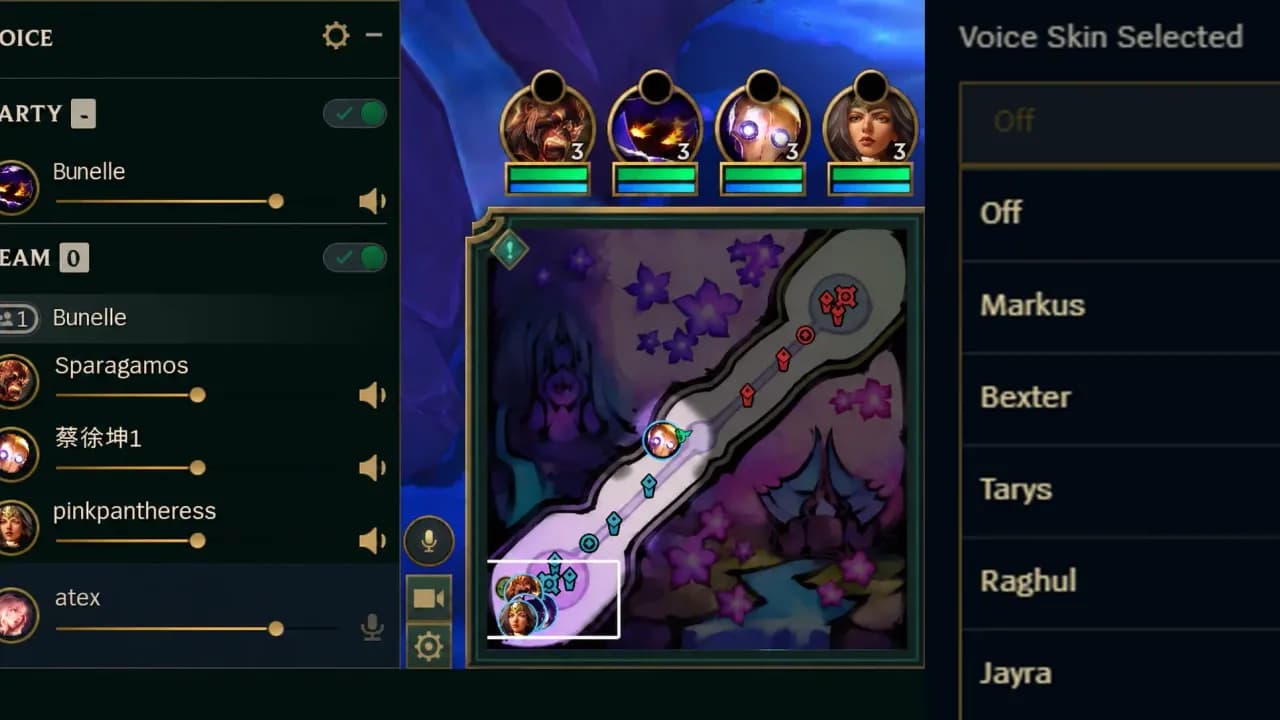
Imagen: Movistar eSports
Riot Games has finally taken the step the community had spent years both asking for and dreading in equal measure. As reported by Movistar eSports, voice chat for League of Legends is now officially available on the PBE, the public test server, although for now only in the North America and Oceania regions. It is the first time the feature has appeared with that official stamp inside the client itself, after a long road full of back-and-forth from the developer.
The news matters because it touches one of the game's most sensitive nerves. LoL is a competitive title built on the coordination of five people, and for a long time that coordination has depended on pings, text chat or external programs like Discord. Putting voice inside the client changes how solo players approach the game, the dynamics of improvised teams and, along the way, reopens the never-ending debate about toxicity on the Rift.
What you need to know
- Official launch in testing: Riot has enabled League of Legends voice chat on the PBE, its public test server.
- Only two regions for now: the feature is available exclusively on the North America (NA) and Oceania (OCE) PBE.
- A carefully weighed decision: according to Movistar eSports, Riot gave the matter a great deal of thought before launching it, aware that it is a tool as useful as it is controversial.
- No confirmation for live servers: the available information does not detail when or how it will reach the official servers or regions such as Europe or Latin America.
- Feedback-gathering phase: like everything that goes through the PBE, what we see now may change before its final release.
A debate with a long history
The story of voice chat in LoL is the story of a company that could never quite make up its mind. Other competitive games integrated voice long ago and made it a natural part of the experience, while Riot has for years preferred to keep in-game communication limited to pings and text. The underlying argument has always been the same: voice is a direct channel for harassment, insults and pressure on players who simply want to enjoy a relaxed game.
At the same time, anyone who has played on an organized team knows that the difference between coordinating by voice and doing it with pings is enormous. Rotations, objective control, team fights and quick calls are settled in seconds when you can talk. That advantage has always been within reach of premades with Discord open, while the solo player was left at a disadvantage. What Riot is now putting on the table is, in theory, a way to level that playing field.
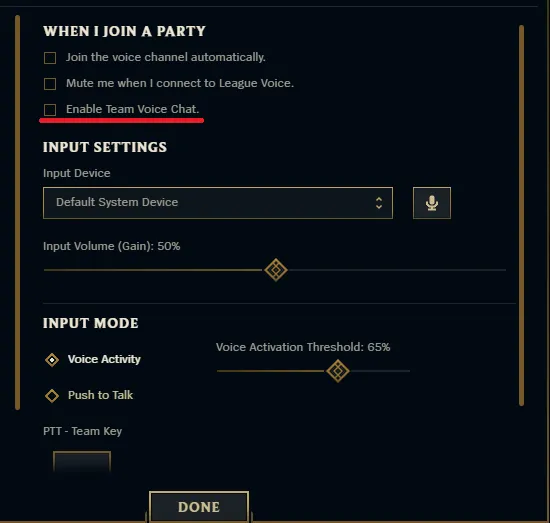
What changes and who it affects
For now, the real impact is limited. The PBE is a testing environment that specific players access, where features are enabled, adjusted and sometimes scrapped. The fact that the tool appears only in North America and Oceania suggests Riot wants to observe behavior in specific communities before widening the rollout. For most of the Spanish-speaking community, both in Europe and the Americas, the new feature is still out of reach.
What does change is the message. By labeling the launch as official, Riot stops treating voice as a distant experiment and turns it into a feature with a clear destination. For teams like ours, that means starting to think about how to fit it into training routines, what role it will play in solo queue games and how to prepare our players and creators for an environment where spoken communication will be the norm rather than the exception.
Our take
At Underworld Lordz we had been waiting for this move for a while, and we think it is good news, with some caveats. For the competitive player, integrated voice is a tool for improvement: learning to call a fight, ask for vision or set up an objective in real time is part of the path to the top level. Making that possibility no longer depend on having friends online in Discord is only fair. What does concern us is that it is arriving late and in dribs and drabs, with Europe and Latin America left out of the first testing phase and no clear timeline in sight.
Our biggest criticism concerns how toxicity is being handled. Riot has spent years repeating that voice was dangerous for the health of the game, and now it is launching it without the public information clarifying what moderation, mute or reporting systems come with it. If the plan is to switch it on and trust the mute button, the outcome will be predictable: the most vulnerable players will turn it off on day one and we will be back where we started, only with more noise. Voice only works if it comes with serious tools to protect the people using it.
For content creators there is a clear opportunity. Games with voice are far more lively on stream, generating clips, tense moments and connection with the audience. They also open the door to new live coaching formats. But it pays to be prepared: what is said over voice in a public game can end up on a stream, and that changes the rules for everyone.
What do you think?
Voice chat is now a reality on the PBE, and sooner or later it will reach our regions. Do you think it will raise the competitive level, or will it only make games more toxic? Tell us in the team chat or on our Discord: would you turn it on from your very first game, or leave it muted forever?
Your turn
What do you think?
Share your take in the team chat or on Discord. We feature the best opinions in the next article.
How did it land?
Community takes
…
Keep reading
Competitivo
T1 Crash Out of Worlds and Their Streak Is Over: Why That Could Be Good News

Competitivo
BrokenBlade Set to Join Movistar KOI: The Signing Shaking Up the Race for LEC 2027
Competitivo
Worlds 2026 heads into its grand final: what we know and what still needs confirming

Competitivo
BrokenBlade to Movistar KOI in 2027: the rumor shaking up the LEC market
Team guides
Chat de voz en League of Legends: guía para ranked
Team guides
Rework de Mel en League of Legends 26.22: guía y counters