
Sony brings AI upscaling to the standard PS5 with QSSR
By Redacción UWLG · Source: Gamereactor España
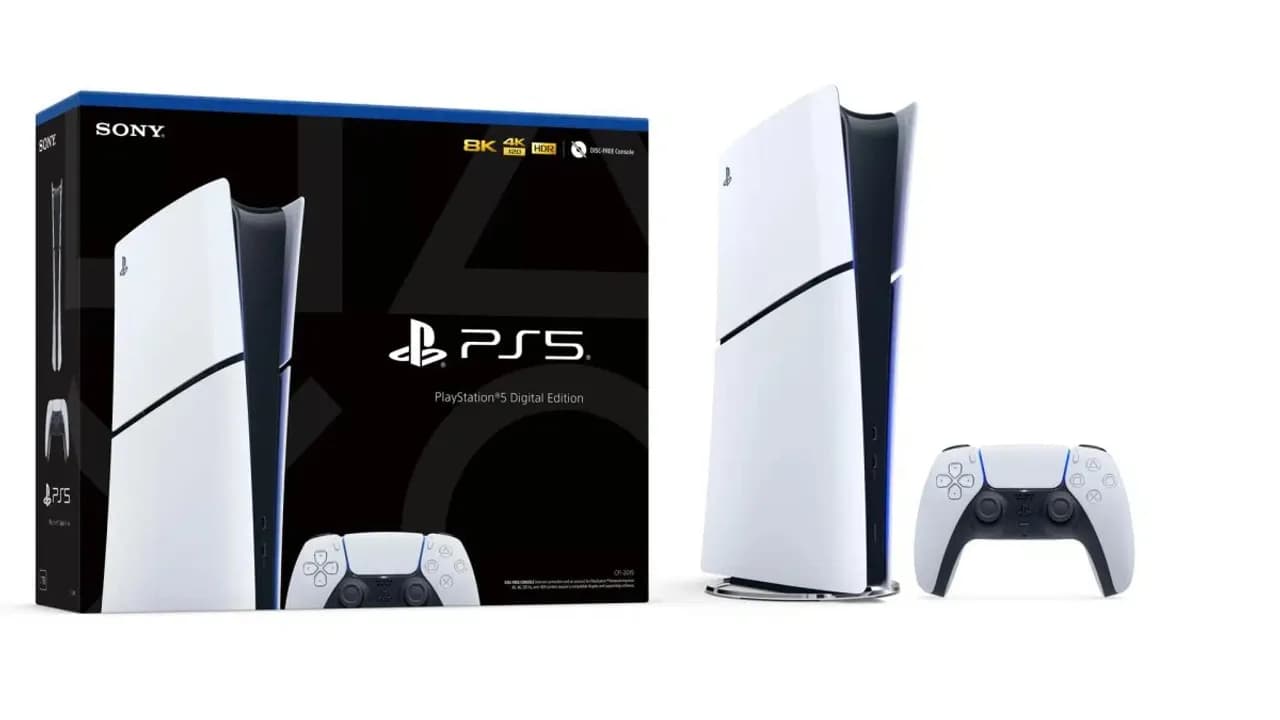
Imagen: Gamereactor España
Sony has officially announced Quick Spectral Super Resolution (QSSR), an AI-based upscaling system designed for standard PlayStation 5 models. As reported by Gamereactor España, the first games to support it are Marvel’s Wolverine and Ghost of Yōtei, which received their patches last Thursday, October 1. In both games, QSSR is an optional graphics setting that each player can turn on or off.
This news matters more than it might seem at first glance. Until now, Sony's AI upscaling, through PSSR, was one of the strongest reasons to buy a PS5 Pro. Bringing a version of that technology to the original console means that the huge number of players who haven't upgraded can also expect a sharper, more stable image without spending another penny.
What you need to know
- QSSR is an AI upscaler designed for the standard PS5, and Sony describes it as an evolution of PSSR.
- PSSR remains exclusive to the PS5 Pro.
- Marvel’s Wolverine and Ghost of Yōtei have offered it as a graphics option since October 1.
- Sony has confirmed it will make the tool widely available to PlayStation developers.
- Digital Foundry's analysis highlights significant improvements in temporal image stability.
What QSSR is and how it differs from PSSR
The news first broke through Video Games Chronicle and was later expanded on in a PlayStation Blog post. The idea is simple to explain but complex to execute: take what was learned with PSSR and adapt smart upscaling to less powerful hardware. The stated goal is to improve detail and image stability in supported games without replacing the console you already have in your living room.
| Feature | PSSR | QSSR |
|---|---|---|
| Console | PS5 Pro | Standard PS5 |
| Role in the ecosystem | Upscaler exclusive to the Pro model | Evolution of PSSR adapted for the base model |
| First games confirmed by the source | — | Marvel’s Wolverine and Ghost of Yōtei |
Who it affects and what could change
The biggest winners are obvious: anyone playing on a standard PS5. But the key detail is that it's being opened up to studios. If Sony hands QSSR to its entire developer community, the technology won't stay limited to two high-profile exclusives; it could spread across much of the catalogue, including multiplayer games. That's where this conversation hits close to home for us.
For those who already own a PS5 Pro, things change too, though more subtly: PSSR stays exclusive, but the perceived gap between the two models could narrow if QSSR delivers on its promise. For now, Digital Foundry's technical analysis focuses on temporal stability, meaning less of the flickering and jagged edges that appear when the camera or objects are in motion.
Our take
Here in the Underworld Lordz newsroom, we see this as good news with some fine print. Making it optional is the right call: competitive players want full control over their settings, and any upscaling system has to prove it doesn't add latency or artifacts that could throw you off in critical moments. The source says nothing about the impact on controller response or frame rate, so our advice is clear: try it in casual matches before taking it into ranked or a tournament. A more stable image helps you read your opponent's movement, but only if it doesn't cost you milliseconds.
For content creators, temporal stability is gold. Streaming and video platforms compress footage mercilessly, and an image that flickers or blurs in motion degrades even further once it goes through Twitch or YouTube. If QSSR cleans up the source image, your captures and streams from a standard PS5 could look noticeably better without upgrading your setup. That said, it's worth remembering that the first two supported games are single-player adventures; the real test will come when it shows up in competitive titles.
Our main criticism is about transparency. Sony should clearly explain how much performance QSSR costs and where it falls short of PSSR. Without that information, the average player will have to rely on third-party analysis. Even so, making a technology that used to be a high-end privilege available to everyone is a step in the right direction, and we hope studios take advantage of it soon.
What do you think?
Is QSSR the boost the standard PS5 needed, or just a patch to extend its life against the Pro? Tell us about your experience if you've already tried it in Wolverine or Ghost of Yōtei. Would you turn it on in a competitive match, or would you rather not risk a single millisecond? Join us in the team chat and on Discord to discuss it.
Your turn
What do you think?
Share your take in the team chat or on Discord. We feature the best opinions in the next article.
How did it land?
Community takes
…
Keep reading
Hardware
QSSR comes to every PS5: the AI upscaler that aims to end blurry image quality
Hardware
Google unveils a conveyor-belt keyboard: now the keys come to you

Hardware
Ditto Transforms into a Controller: The Purple Pokémon Arrives on Nintendo Switch 2

Hardware
October's PS Plus: F1 25 and Hunt: Showdown 1896 lead the competitive grid