
All Roads Lead to Arma: The Series That Shaped the Modern Shooter
By Redacción UWLG · Source: PC Gamer
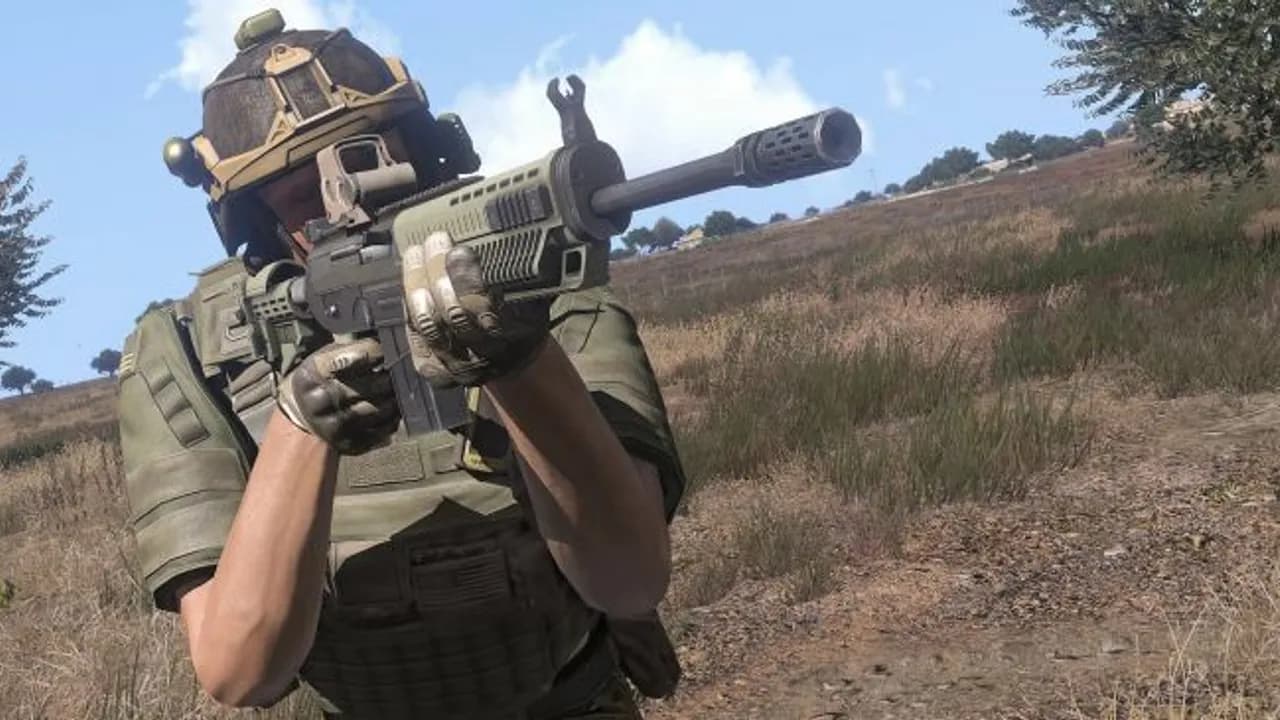
Imagen: PC Gamer
PC Gamer has published a piece with a headline that reads like a verdict: all roads lead back to Arma. The idea the outlet defends is as simple as it is blunt: without Bohemia Interactive's military simulation series, today's gaming landscape would look very different. That is no small claim coming from a publication that has spent decades covering PC as a platform.
So why should this matter to an esports team and a community that lives between tournaments, streams and clips? Because PC Gamer's thesis points directly at the family tree of what we play competitively today. When we talk about battle royale, survival with permadeath or tactical extraction, we are talking about branches that, by this reading, grew from the same trunk. Understanding where the genre comes from helps you understand where it is going.

What you need to know
- PC Gamer argues that Arma is the point of origin to which a large part of modern gaming can be traced.
- The central claim is that, without Arma, the industry would look radically different today.
- The focus is not on a new release or sales figures, but on the series' cultural and design influence.
- The piece sits within the outlet's coverage of first-person shooters, where Arma occupies the pure-simulation end of the spectrum as opposed to arcade.
- The source provides no comparable numerical data, so there is no chart here: this is about legacy, not statistics.
An open laboratory that gave birth to genres
The key to understanding PC Gamer's thesis lies less in the base game than in its modding ecosystem. Arma has always been less a closed shooter and more a platform: a huge military sandbox with a mission editor, accessible scripting and a community willing to break everything in order to build something new. That openness is what turned the series into a breeding ground.
From that breeding ground sprang experiments that are now genres in their own right. Open-world survival with zombies and permadeath, the formula of dozens of players dropping onto a shrinking map until only one is left standing, squad play with defined roles and mandatory communication... all of it was tested first as a modification inside Arma before becoming a standalone product. When PC Gamer says all roads lead back to Arma, it means that many of the trends we now take for granted were born as hobbyist mods on top of that foundation.
Who this reading of the past affects
For the competitive player, this lineage explains some of the quirks of the games we play. The weight of the weapons, the importance of positioning over raw aim, the tension of losing everything to a single bad decision: these are inherited from a simulation approach that battle royale softened but never fully removed. When someone complains that a shooter feels slow, they are often describing DNA that comes from Arma.
For the content creator, the message is different: genres are not always invented by big studios behind closed doors. They are invented by people playing, modding and sharing. That is the same logic that drives the creator scene today, and it is worth remembering when the industry tries to sell us every trend as if it came out of nowhere.
Our take
Here at the Underworld Lordz newsroom we largely agree with the substance of PC Gamer's article, though with one important caveat. It is true that Arma was the laboratory, but it is equally true that the laboratory never managed to capitalize on its own discoveries. Other studios took the ideas born on its servers, polished them, made them accessible and walked away with the millions of players and the competitive scene. Arma remained the cult game that everyone cites and few actually play.
And that is the critical part: for our community, which competes and creates content, Arma is an almost mythical reference point but hardly a tool. Its learning curve, its pace and its technical demands keep it far from the tournament format and the thirty-second clip that drive the scene today. Recognizing its legacy does not mean pretending it is a modern competitive game. It is the root, not the fruit.
That said, we think it is healthy for a major outlet to remind us where it all comes from. We live in an era where every new battle royale is presented as a revolution, and it pays to have a memory. If the industry ever wants to truly innovate in the shooter again, it will probably have to look back at that open-platform model where the community calls the shots. That is where the ideas that feed us today were born, not in the latest battle pass.
What do you think?
Maybe you have played Arma at some point, or maybe you only know it as that name that comes up whenever someone explains the origins of battle royale. Whatever your case, the question PC Gamer leaves hanging is still open: do you think the series deserves credit for shaping modern gaming, or is its influence overrated compared to the games that actually won over the masses? Tell us in the team chat or on our Discord.
Your turn
What do you think?
Share your take in the team chat or on Discord. We feature the best opinions in the next article.
How did it land?
Community takes
…