
Xbox Cloud Gaming Is Leaving 2020 Samsung Smart TVs: What You Need to Know
By Redacción UWLG · Source: Vandal
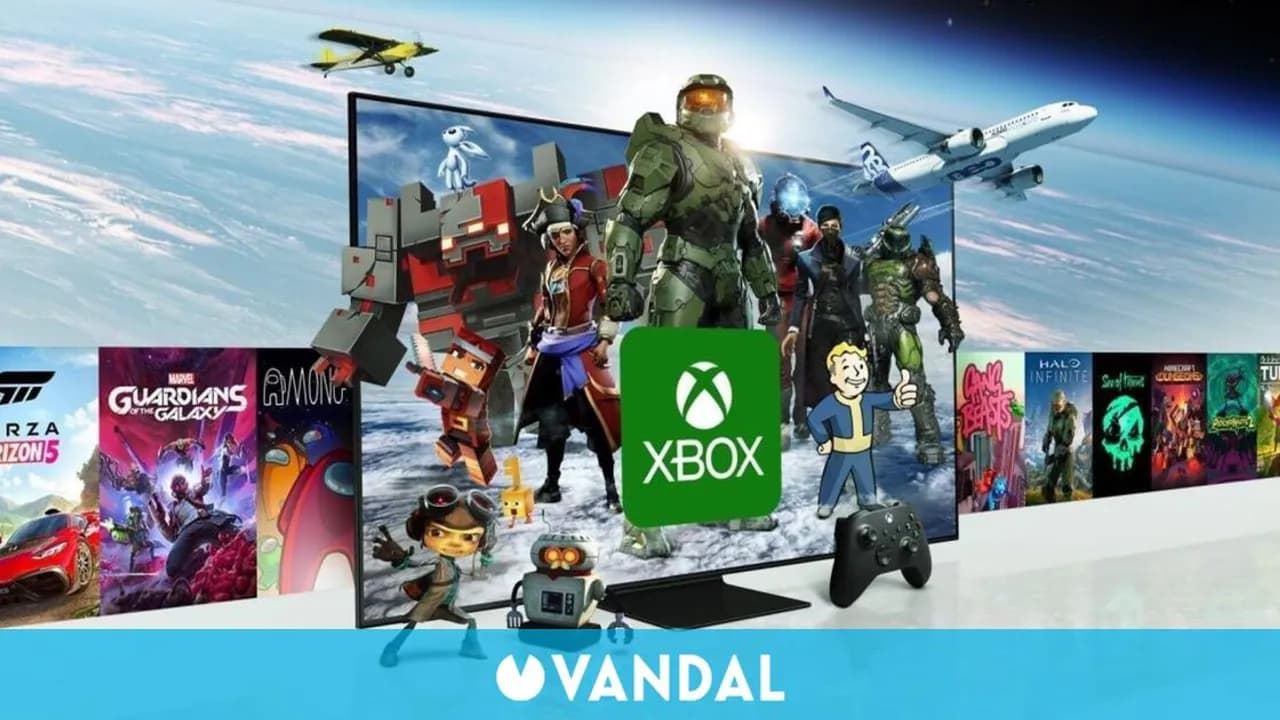
Imagen: Vandal
Microsoft has started emailing some Smart TV users to let them know their access to Xbox Cloud Gaming has an expiration date. As reported by Vandal, 2020 Samsung TVs will no longer be able to use the cloud gaming app as of November 3. It's a highly symbolic move, because those models were the first third-party devices to get the service. In other words, Microsoft is taking game streaming away from the very hardware it used to prove that Xbox could live beyond the console.
Why does it matter? Because the big promise of cloud gaming has always been freedom from hardware: if you have a screen and a connection, you can play. When a TV that still works perfectly gets left behind, that promise loses some of its weight. On top of that, the news comes at a time of constant changes to the service, including tests of a free ad-supported tier and caps on playtime. Everything suggests Microsoft is redefining what it wants Xbox Cloud Gaming to be, and users are feeling those adjustments.
What you need to know
- 2020 Samsung Smart TVs lose access to Xbox Cloud Gaming on November 3.
- Microsoft has notified affected users by email.
- The official reason is technical: the new version of the service's technology is no longer compatible with those TVs' operating system.
- Samsung models from 2021 onward remain compatible, as do phones, tablets, PCs and Xbox consoles.
- Jez Corden of Windows Central questions that explanation, since the app runs as a web app.
What changes and who is affected
The direct impact is limited to people who played in the cloud on a 2020 Samsung TV. For them, the fix is to connect another compatible device to the TV, such as a PC, a console or even a phone with screen mirroring, or to move to a different screen. None of this is impossible, but it does break the convenience of turning on the TV, pairing the controller and playing, which was exactly the selling point.
According to the information cited by Vandal, which comes from Windows Central, Microsoft attributes the decision to an update to the service's technology that those TVs' operating system can no longer support. This is where things get interesting: Jez Corden, the author of the original article, is skeptical of that justification. His argument is that the app is essentially a web app that handles video, so it doesn't seem like it should have such demanding requirements. We don't know exactly what's behind it, but the doubt is reasonable.
A service in full transformation
This removal isn't happening in a vacuum. Microsoft has been experimenting with its streaming service for a while: a free version funded by advertising and limits on hours of use. Taken as a whole, it fits a company that is cutting costs, reorganizing its platform and deciding where it's worth being. Supporting older devices with a small user base is exactly the kind of expense that gets cut first.
Our take
Here at Underworld Lordz, we're clear on this: the problem isn't that a years-old TV stops getting support, since that happens with any technology. The problem is the lack of transparency. If the app is a web app, as Corden points out, it's hard to understand why it suddenly can't work anymore. And when the technical explanation doesn't hold up, it's easy to assume the real reason is financial. We'd rather a company openly say that supporting a device isn't profitable than dress it up as an incompatibility.
For competitive players, this reinforces something we already knew: cloud gaming isn't yet a serious platform for competition. Beyond latency, there's now the added uncertainty that your device could be dropped with little warning. If you train or compete, your setup needs to be something you control, not something that can disappear with an email. For content creators, though, there's a different lesson: game streaming is a fantastic tool for trying out titles without installing them or for showing something quickly on stream, but it's not a good idea to build your workflow around it.
That said, let's be fair: the service is still available on plenty of platforms, including newer Samsung TVs. This isn't the end of Xbox cloud gaming, but rather a reminder that when you play in the cloud, someone else makes the rules. And those rules can change.
What do you think?
Are you affected by this change, or do you know someone who plays on a 2020 Samsung TV? Do you think the reason is really technical, or is Microsoft cutting where it hurts the least? Would you trust cloud gaming for competing or creating content? Let us know in the team chat or drop by our Discord: is the future of gaming in the cloud, or do we still need our own hardware?
…
Your turn
What do you think?
Share your take in the team chat or on Discord. We feature the best opinions in the next article.
How did it land?
Community takes
…
Keep reading

Parches
End of Abyss gets patched in a day, leaving its first review out of date
Parches
Steam Frame gains up to 12% more battery life with a Valve update
Parches
Masters of Albion recaptures the magic of god games with its huge update
Parches
Doom: The Dark Ages Is Still Going Strong: Revelations Is Getting a Free Endless Massacre Mode