
Steam Could Have Been a P2P Network Called “Grid”: What Minh Le Reveals
By Redacción UWLG · Source: Vandal
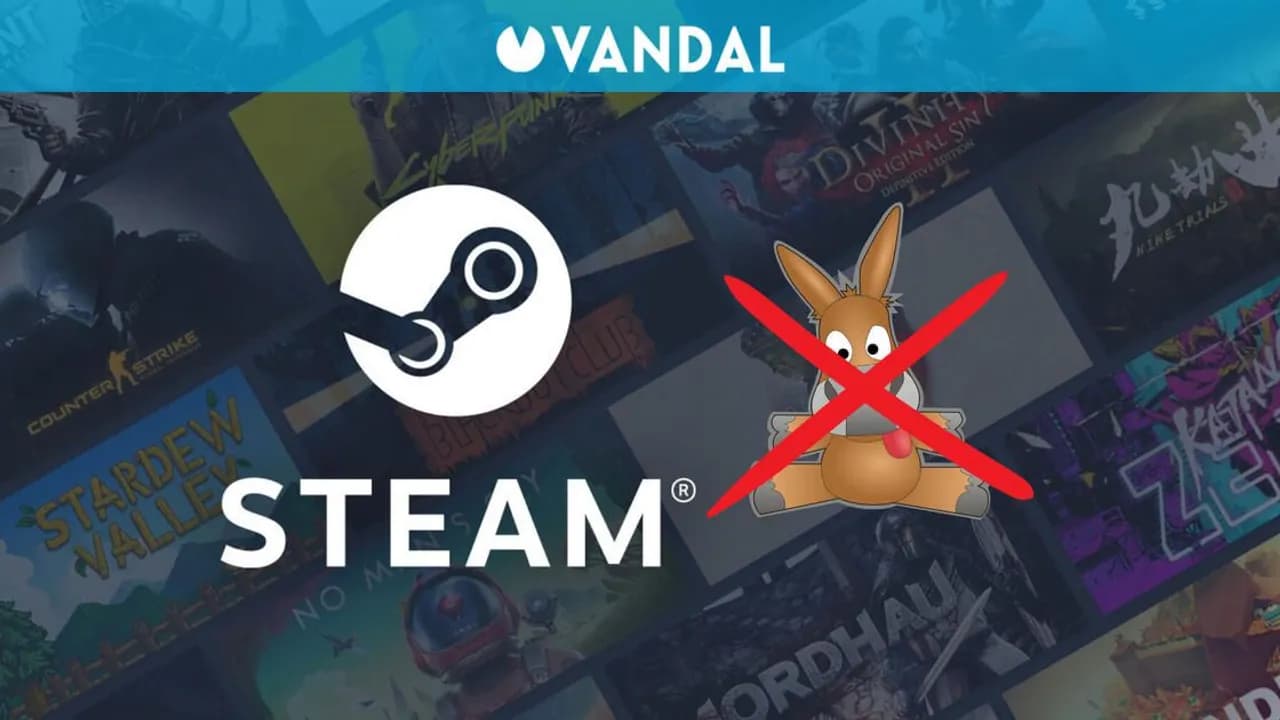
Imagen: Vandal
Before it became the store that dominates PC gaming, Steam was something else on Valve's whiteboard. As reported by Vandal, Minh Le, co-creator of Counter-Strike, has said that the project was originally called “Grid” and was conceived as a peer-to-peer distribution system along the lines of BitTorrent or eMule: a network in which every computer downloads content and shares it with everyone else at the same time.
It might sound like a museum-piece anecdote, but it isn't. Steam has shaped how we buy, update and play games on PC for more than twenty years, and knowing that it came close to working in a radically different way helps explain the decisions that made Valve what it is today. What might have been also tells a story, and in this case it says a lot about control, reliability and priorities.
What You Need to Know
- Steam was originally called “Grid”, according to Minh Le, co-creator of Counter-Strike.
- The original idea was a peer-to-peer network in which users' machines would act as both clients and servers.
- According to the source, several problems led Valve to rethink that model.
- Steam launched as a client focused on automatically updating Valve's games and later opened up to other companies.
- Today it is the largest distribution platform for PC, backed by hardware such as the Steam Deck, Steam Machine and Steam Frame.
From “Grid” to the Store That Rules Them All
The concept Minh Le describes is the same one behind torrent clients: there is no single server handing files out to everyone, but rather a mesh of users passing pieces to one another. On paper, it makes a lot of sense for a company that needs to deliver hefty patches to millions of people without paying for all the infrastructure. In practice, that approach depends on enough users sharing and on their connections holding up, which is never guaranteed.
The Steam that eventually shipped took a different path: first, a launcher to keep Valve's own games up to date; then, an open door for third parties; and, over time, a complete ecosystem of features and devices.
| Aspect | Original concept | Steam today |
|---|---|---|
| Name | Grid | Steam |
| Distribution model | Peer-to-peer network, BitTorrent or eMule style | PC distribution platform |
| User's role | Client and server at the same time | Client |
| Scope | Content distribution | Store, multiple features and in-house hardware |
Why It Matters That Minh Le Is the One Saying It
This isn't a forum rumor. Minh Le is one of the people who turned a mod into one of the pillars of competitive PC gaming, and his career has been tied to Valve since the early years. Having someone so close to the company put a name to that early stage gives the account real weight, although it's worth remembering that this is his recollection and that the source doesn't specify exactly which problems forced the change of course.
Our Take
Here at Underworld Lordz, we're clear on this: for the competitive scene, dropping the P2P model was probably the best thing that could have happened. When a patch drops on the same day as a qualifier, the only thing that matters is that every player has it installed in time and on equal terms. A system that depends on how many users happen to be sharing at that moment introduces a variable no team wants to deal with minutes before an official match. That's our interpretation, not something from the source, but anyone who has sat through a never-ending download before a tournament will get it.
That said, it's not all good news. The path Valve chose concentrated control of PC distribution in a single company, and that has consequences for content creators and small studios, who depend on the rules, visibility and algorithms of a single store. The idea of a network spread across the players themselves had a touch of community utopia that, now that Steam even builds its own hardware, sounds almost exotic.
For content creators, the story is also a useful reminder: platforms that seem eternal started out as experiments that could have turned out completely differently. It's unwise to build an entire career on the assumption that today's ecosystem will always stay the same.
What Do You Think?
Imagine Steam had launched as “Grid”, with downloads shared between players. Do you think competitive PC gaming would be freer today, or just more chaotic? Drop by the team chat or our Discord and let us know: would you have stuck with the P2P model or with the Steam we know?
Your turn
What do you think?
Share your take in the team chat or on Discord. We feature the best opinions in the next article.
How did it land?
Community takes
…
Keep reading

Hardware
QSSR: The Base PS5 Gets Pro-Style AI Upscaling, but Only in Two Games

Hardware
Sony quietly revamps the PS5 Slim's internals: cheaper to make, not to buy

Hardware
Disney cools the rumor: buying Epic Games isn't on the table, for now

Hardware
Micro Center Will Make You Promise Your RTX 5090 Won't Leave the Country