
The EU Goes After Virtual Currencies: Ten Companies in the Crosshairs
By Redacción UWLG · Source: GameSpot

Imagen: GameSpot
Consumer protection authorities in the European Union have announced a series of coordinated actions against ten video game companies, as reported by GameSpot. The names on the list include heavyweights such as Activision Blizzard and Ubisoft, accused of relying on so-called dark patterns: interface and storefront designs built to push players into spending more than they intended, with a particular risk for minors and for people prone to gaming addiction.
This matters because it strikes at the heart of the current business model. Virtual currencies, paid bundles and in-game stores are not a side feature: they are the main source of revenue for many of the titles we play every day on the competitive circuit and that fill hours of content on Twitch and YouTube. If Brussels concludes that these systems cross the line into manipulation, the impact will not stop at a single company. It will force the entire industry to rethink how it sells cosmetics, passes and items.
What you need to know
- Ten companies are on the radar of European consumer authorities, with Activision Blizzard and Ubisoft as the most visible cases.
- The focus is on dark patterns, design practices that exploit user biases so players end up spending more.
- The clearest example is virtual currency sold in bundles that never line up with the actual prices in the store.
- Destiny 2, Fortnite and Call of Duty are cited as games that use systems of this kind.
- According to GameSpot, Fortnite is one of the few titles that is changing its approach to in-game currency.
How the virtual currency trap works
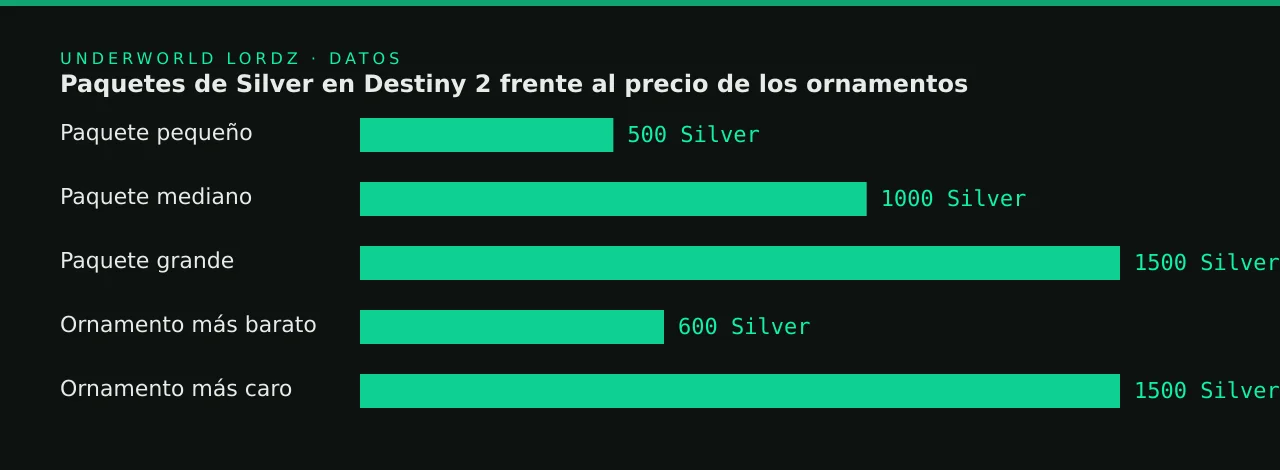
If you have ever bought currency inside a game, you already know the trick even if you never put a name to it. GameSpot illustrates it with Destiny 2: the game's currency, Silver, is sold in bundles of 500, 1,000 and 1,500 units. However, a set of armor ornaments costs between 600 and 1,500 Silver. The result is that you are almost always a few coins short of the item you actually wanted, so you end up buying the next bundle and are left with a remainder that serves no real purpose. In practice, it is a one-way currency exchange: your money goes in, but it never comes back out.
| Item | Amount of Silver |
|---|---|
| Small bundle | 500 |
| Medium bundle | 1,000 |
| Large bundle | 1,500 |
| Cheapest ornament | 600 |
| Most expensive ornament | 1,500 |
Destiny 2 is not an exception. GameSpot points out that massively popular games such as Fortnite and Call of Duty have their own currencies and their own bundles designed with the same logic. The conclusion is always the same: the system is set up so that you fall a handful of digital coins short on exactly the item you care about.
Who is affected and what could change
The European authorities' argument is not just economic, but about protection. Minors and people vulnerable to addiction are the most exposed to a design that turns every purchase into a small frustration resolved by yet another purchase. The fact that the action is coordinated across authorities in different countries suggests this is not an isolated complaint, but a joint move with real leverage. For the companies named, the most likely scenario is having to justify their practices or adapt them, at least in the European market. And when a company changes its store for Europe, the temptation to unify the system globally is strong.
Our take
At Underworld Lordz we have spent years watching in-game stores get refined into machines for squeezing wallets. We have nothing against a studio charging for cosmetics: content costs money and someone has to pay for it. What we find indefensible is hiding the price behind a made-up currency and bundles calculated so that you are always left with too much or too little. If an ornament costs 600 coins, sell me 600 coins. Anything else is a casino trick dressed up as a store.
For competitive players, the takeaway is clear. The time and money a team invests in a game should go toward improving, practicing and competing, not toward navigating a maze of conversions designed to confuse. And for content creators the question is even more delicate: many make a living showing off skins, openings and new store items, and it is worth asking whether we are normalizing, for audiences that are often very young, a system that regulators consider manipulative.
We are glad that Fortnite, according to the source, is moving in a different direction, but we are also skeptical. The industry rarely changes out of conviction; it changes when someone with the power to impose penalties knocks on the door. The fact that it takes the European Union to force something as basic as price transparency says a lot about how far things have gone.
What do you think?
We have all bought a coin bundle at some point that left us with a useless leftover, and we all know it was no accident. Now that Europe is putting the issue on the table, we want to hear your stance: do you think companies will genuinely change their stores, or just give the system a makeover to dodge the penalties? Tell us in the team chat or on our Discord.
Your turn
What do you think?
Share your take in the team chat or on Discord. We feature the best opinions in the next article.
How did it land?
Community takes
…
Keep reading

Lanzamientos
GTA VI on Switch 2: Nintendo responds for the first time (and confirms nothing)
Lanzamientos
Phantom Blade Zero Wins Over the Press and Enters the GOTY 2026 Race
Lanzamientos
GTA 6 Shows Off Vice City: Three Screenshots and a Frighteningly High Graphics Bar

Lanzamientos
Forza Horizon 6 gets a PS5 release date: Japan comes to PlayStation in January 2027