

Valve isn't touching the Steam Deck 2 roadmap despite the RAM crisis
By Redacción UWLG · Source: Vandal
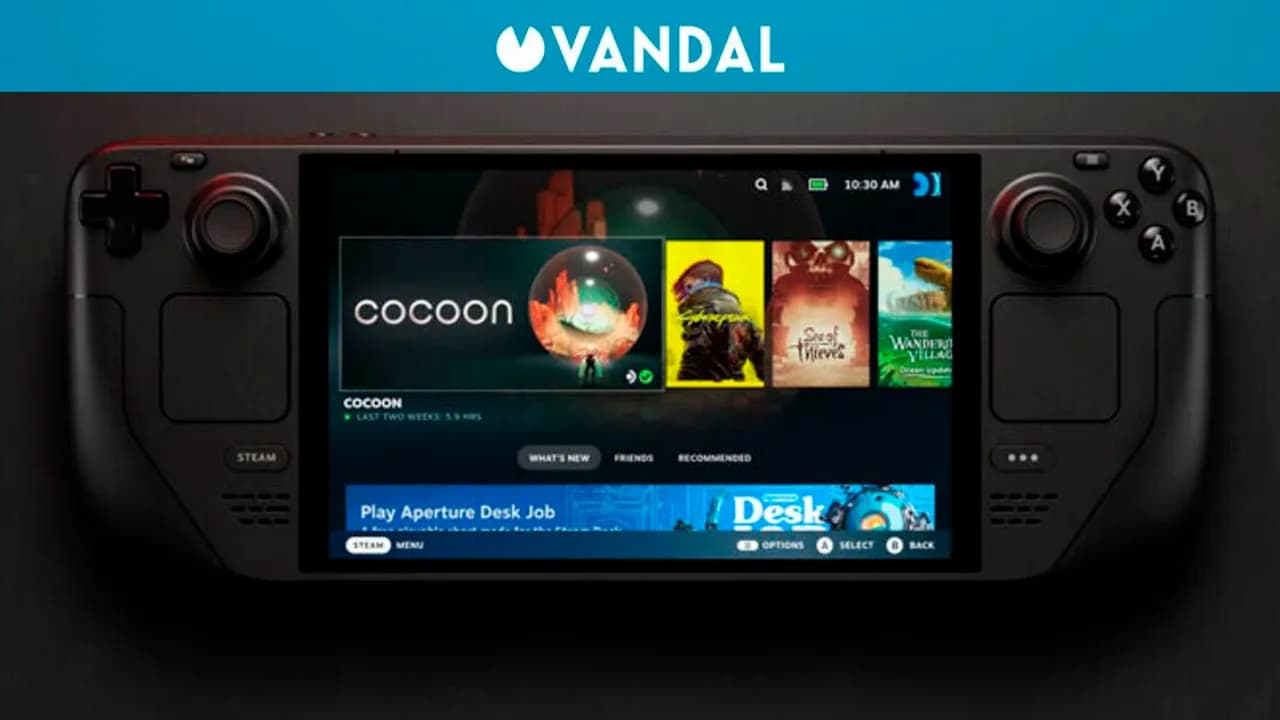
Imagen: Vandal
Rising prices for RAM and NAND memory are shaking the entire tech industry, and many of us assumed the successor to the Steam Deck would be one of the first casualties. However, as reported by Vandal, Valve has stepped forward to make it clear that, for now, its plans for Steam Deck 2 have not changed. Pierre-Loup Griffais, a developer at the company, maintains that they are still working toward the same goals they had before the component market became impossible.
The clarification matters because 2028 was pointed to months ago as a possible launch window, and with memory getting more expensive, it was reasonable to expect a delay. Valve has never confirmed that date, but it has acknowledged that it is already developing the new hardware. For a community like ours, with players who use the Deck to practice, travel to events and create content, knowing the project is not on hold is meaningful news.
What you need to know
- Valve says it is keeping the same goals for Steam Deck 2 despite the crisis affecting RAM and other components.
- The statements come from Pierre-Loup Griffais, one of the company's developers, according to Vandal.
- 2028 had been suggested as a possible launch year, although Valve has never officially confirmed it.
- The philosophy remains to wait for a genuinely significant performance leap, not to release a revision just because slightly faster chips exist.
- Valve acknowledges it is already working on the new hardware, but has given no date or specifications.
The Valve philosophy: no revisions just for the sake of releasing something
Griffais's message is consistent with what the company has repeated since it launched the first Steam Deck. They don't want to fall into the annual cycle of other manufacturers' handhelds, where every season brings a model slightly better than the last. Their stance is to wait until technology allows a performance leap that truly justifies a new generation, and that idea hasn't budged an inch because of the memory crisis.
This can be read two ways. On one hand, it reassures anyone who just bought a Deck: it isn't going to become obsolete in a few months. On the other, it makes clear that the successor won't arrive sooner just because the market is nervous or because the competition speeds up. Valve moves at its own pace, and that pace depends on when the available hardware meets its expectations, not on the commercial calendar.
Why the RAM crisis was a real threat
Memory is one of the most price-sensitive components in a handheld of this kind. If RAM and NAND become more expensive, the manufacturer has two options: absorb the cost and sacrifice margin, or raise the final price and risk losing appeal. The Steam Deck has sold, in large part, by offering a price-to-performance ratio that is hard to match, so any disruption in the supply chain hits its strongest point directly.
Valve saying its goals haven't changed doesn't mean the crisis isn't affecting it. It means that, for now, it hasn't had to redesign the project or give up on what it wanted to achieve. That's an important nuance: there is no promised date and no price guarantee, only confirmation that the direction remains the same. And since 2028 is still a speculative horizon, there is room for the market to stabilize before the hardware goes into production.
Our take
Here at the Underworld Lordz editorial team, we welcome the fact that Valve isn't giving in to the temptation of releasing a Steam Deck 1.5 with four more gigs of RAM and a marginally better chip. For the competitive player, a handheld only makes sense if it can run the games we play with stable frame rates and no thermal surprises. A real performance leap, even a late one, is worth more than two mediocre revisions that fragment the user base and complicate optimization.
That said, we have to be critical of the ambiguity. Valve talks about goals, philosophy and waiting for the right moment, but it doesn't put a single number or date on the table. That's convenient for the company and frustrating for anyone who has to decide today whether to buy a current Deck or wait. Content creators who plan their equipment months in advance need more than good intentions.
We're also concerned that the component crisis could end up being passed on to the final price even if the design doesn't change. Valve can keep its technical targets, sure, but if the successor launches at a price that puts it out of reach of the average player, the performance leap will lose much of its meaning. That's the real test: not the chip, but the price tag.
What do you think?
Valve would rather wait for a big leap than launch a minor revision, even if that means sticking with the current Deck for several more years. Do you think that's the right call, or would you prefer a Steam Deck 2 sooner, even if the improvement were more modest? Let us know in the team chat or on our Discord.
Your turn
What do you think?
Share your take in the team chat or on Discord. We feature the best opinions in the next article.
How did it land?
Community takes
…